A fixed jib gives you a preset angle offset and more lifting capacity for the money; a luffing jib gives you continuously variable reach and vertical clearance at the cost of some capacity and setup time. If your job is mostly repetitive picks over a known obstacle, fixed wins. If you’re working around power lines, adjacent structures, or varying pick heights on the same job, luffing earns its price tag fast.
Table of contents
cnxjcm
What Each Jib Actually Does to Your Working Range
Bolt a jib onto a boom tip and you’re not just adding length — you’re changing the entire shape of your working envelope. That’s the part buyers often miss when they’re comparing spec sheets instead of load charts.
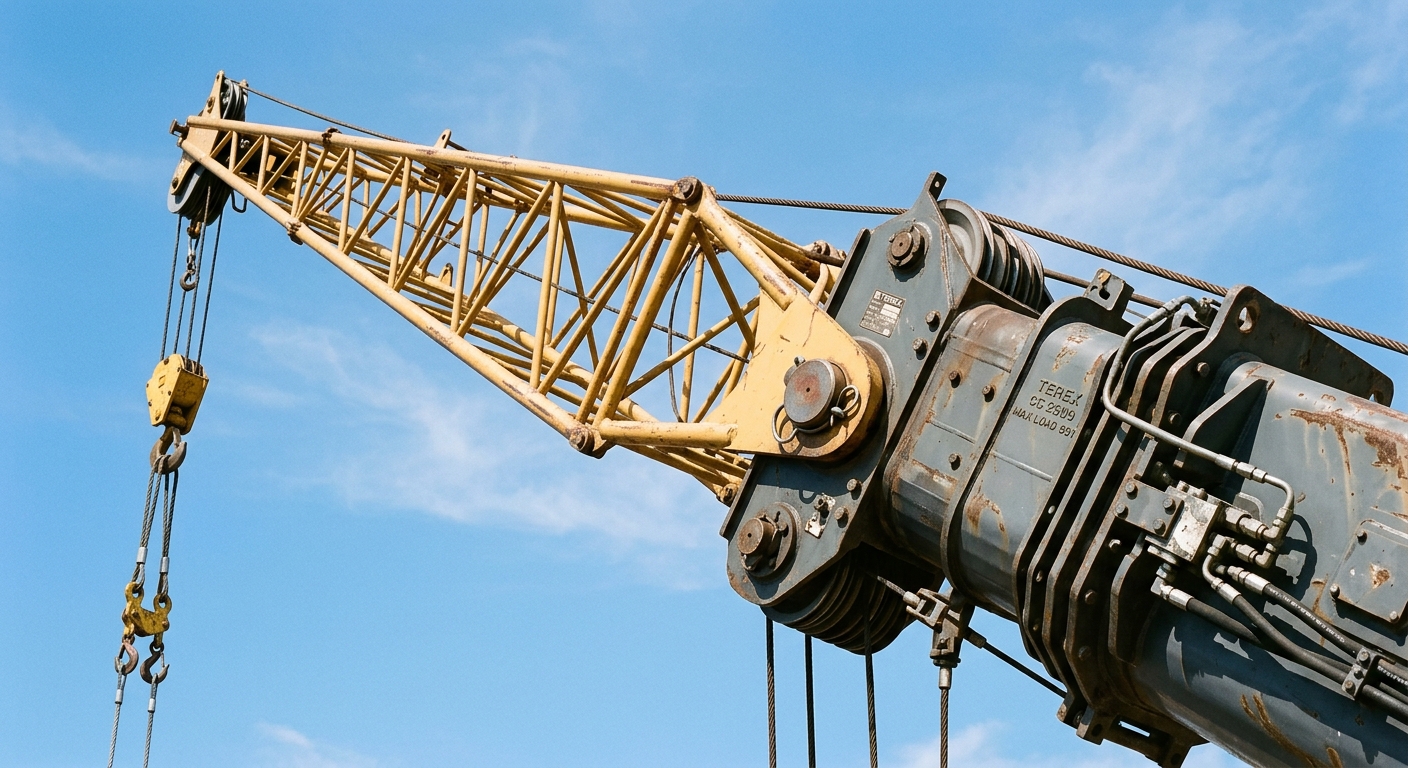
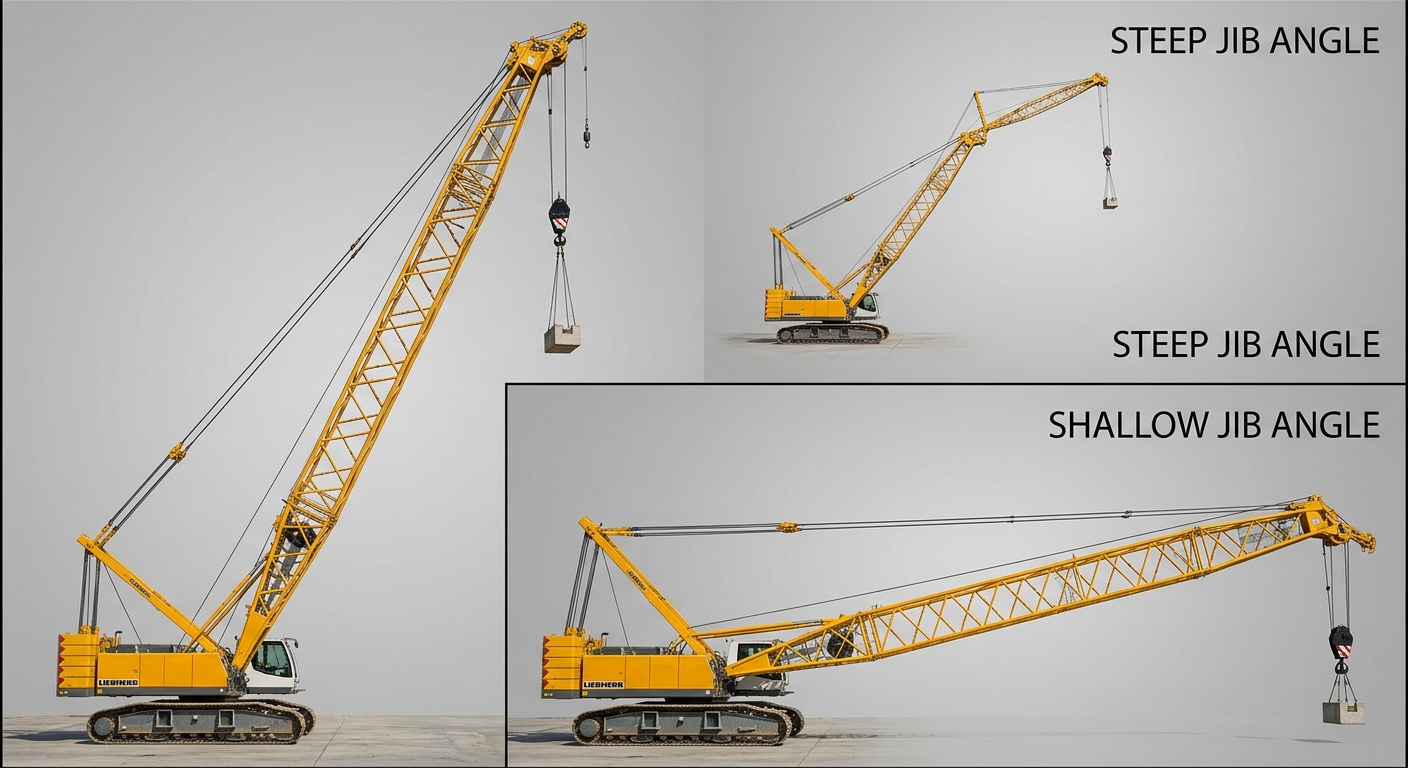
A fixed jib is mounted at a set offset angle from the main boom — typically 0°, 15°, or 30° — and stays there for the whole lift. You choose the angle on the ground, pin it, and that’s your geometry until you land the load and re-pin. A luffing jib, by contrast, has its own hydraulic cylinder that lets the operator change the jib angle relative to the boom while the load is in the air, often across a 0° to 45°+ range.
Practically, this means a fixed jib gets you a fixed increase in tip height and horizontal reach for a given main boom angle. A luffing jib lets you trade reach for height on the fly — swing the jib up to clear a rooftop parapet, then luff it back down to set the load precisely where you need it.
Reach and Angle: The Numbers That Matter
Here’s a number that surprises a lot of first-time crane buyers: a 30° fixed jib offset can cost you 10-15% of your rated capacity at the same radius compared to running the main boom alone. Add a luffing cylinder and pins, and you lose a bit more — usually another 3-8% depending on jib length and manufacturer.
Why? Extra steel and hydraulics at the boom tip shift your center of gravity outward and add dead weight the crane has to lift before it even picks your load. On a 50-ton class rough terrain crane, a 30-foot fixed jib might add 25 feet of tip height at a 30° offset. Swap that for a luffing jib of similar length, and you gain the ability to run anywhere from near-vertical to a shallow 10° angle — meaning your effective working range covers a much wider set of job conditions without changing hardware.
Quick Rule of Thumb
- Fixed jib: best when your pick height and radius are known and repeated
- Luffing jib: best when radius or height changes lift to lift, or obstacles force a workaround
Real-World Scenario: Precast Panel Erection
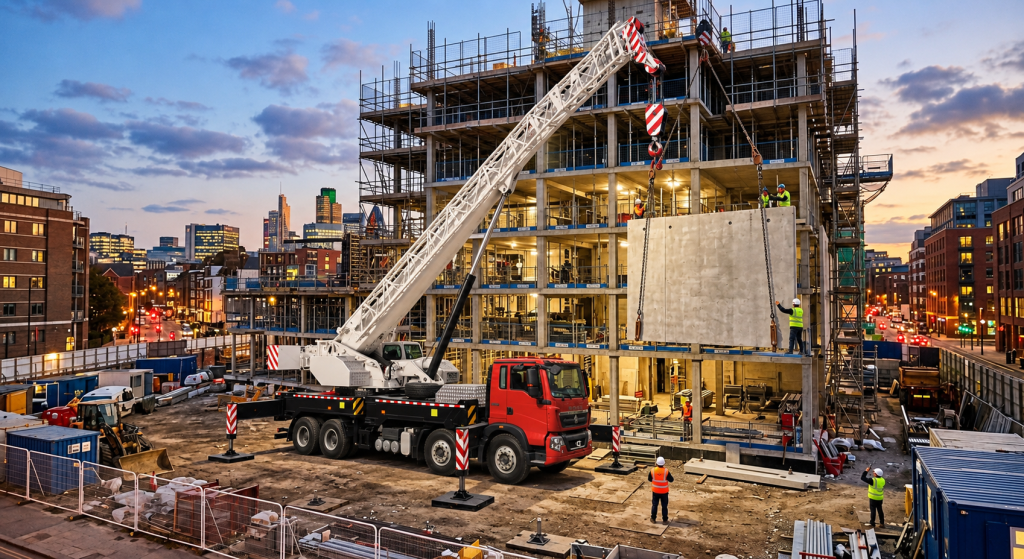
Take a mid-rise precast panel job — a scenario we see often with contractors running 50 ton mobile cranes on tight urban lots. The crane sits in one spot for hours, setting panels at heights ranging from 12 meters at the base to 35 meters near the roofline, all while dodging scaffolding on one side.
A fixed jib would force the crew to stop, land the boom, re-pin the offset angle, and resume — every time the pick height changes meaningfully. That’s dead time, and on a billed-by-the-hour rental, dead time is money walking out the door.
With a luffing jib, the operator adjusts angle from the cab without ever landing a load. Same footprint, same outrigger setup, but the crane adapts to the panel sequence instead of the crew adapting the crane. For jobs with this kind of vertical variability, the luffing jib’s cost premium usually pays for itself within the first week of use.
Where Fixed Jibs Still Win
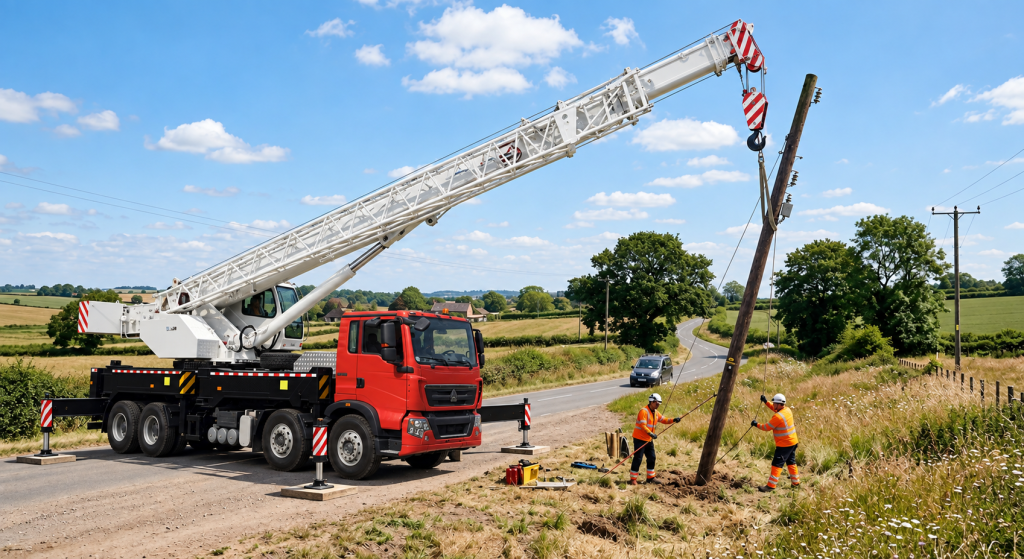
Don’t let the flexibility story fool you — fixed jibs aren’t a compromise, they’re the right tool for a huge share of jobs. Utility pole setting, tank erection, repetitive material handling at a fixed radius — these are situations where the crane does the same motion dozens of times a day.
In these cases, the extra capacity of a fixed jib matters more than angle flexibility you’ll never use. A crane rental company running truck cranes for utility contracts, for example, often standardizes on a 15° fixed jib because it covers 90% of pole-height scenarios without eating into capacity the way a luffing setup would.
Fixed jibs are also simpler mechanically — fewer hydraulic lines, fewer failure points, and less maintenance. For fleets working in remote or harsh environments where hydraulic service isn’t around the corner, that simplicity is a real operational advantage, not just a cost saving.
Capacity Trade-offs You Can’t Ignore
Every jib configuration comes with a capacity penalty — the question is how much, and whether your load charts still clear the job. Manufacturers publish separate load charts for main boom, fixed jib offsets, and luffing jib angles because the numbers genuinely diverge.
| Configuration | Approx. Capacity Loss vs. Main Boom Alone |
|---|---|
| Fixed jib, 0° offset | 5-8% |
| Fixed jib, 30° offset | 10-15% |
| Luffing jib, 0°-15° | 12-18% |
| Luffing jib, 30°+ | 18-25% |
These are ballpark figures — actual numbers depend on jib length, main boom extension, and the specific crane model. But the trend holds across brands: more angle flexibility costs more capacity. Before specifying either option, always cross-check the actual load chart against your heaviest anticipated pick at maximum radius, not just your average lift.
Setup Time and Crew Workflow
A fixed jib takes maybe 15-20 minutes to pin into position on the ground before boom-up. A luffing jib needs that same pinning process plus hydraulic hose connections routed through the boom sections — add another 15-30 minutes depending on crane design and crew familiarity.
That difference matters on jobs where the crane relocates daily. A crane rental outfit servicing multiple small sites in a week will feel the extra setup time of a luffing jib far more than a contractor running one crane on a single site for months. If your business model depends on fast mobilization — think emergency response or short-notice industrial shutdowns — factor this into the decision as heavily as the load chart.
Maintenance and Long-Term Ownership
Luffing jibs bring an extra hydraulic cylinder, additional hoses, and more pinned joints into the equation — each one a potential wear point. Over a 10-year ownership cycle, that typically means more seal replacements, more hose inspections, and a slightly higher parts inventory to keep on hand, especially for fleets operating in dusty or remote environments across Africa or the Middle East where hydraulic contamination is a real risk.
Fixed jibs age more like structural steel than machinery — inspect the pins, check for cracking at the offset brackets, and you’re mostly done. For operators without easy access to hydraulic specialists or spare cylinder seals, this simplicity is worth real money over the life of the machine, not just at purchase.
Matching Jib Choice to Crane Class
Jib selection isn’t independent of the base crane — it has to match the tonnage class and typical duty cycle. On a 30 ton rough terrain crane, a fixed jib is often the default because these machines already work at tighter radii and shorter reach. Step up to an 80 ton all-terrain crane, and luffing jibs become far more common because the jobs — bridge work, industrial plant lifts, wind component handling — demand the flexibility to work around structures at varying heights.
If you’re still narrowing down base crane tonnage before even thinking about jib configuration, it’s worth reviewing our guide on how to choose the right crane tonnage without overpaying first. Jib choice only makes sense once the main boom spec is locked in.


