Choose a rough terrain crane when you need to move between lift points on the same jobsite quickly and the ground can support outriggers. Choose a crawler crane when the ground is too soft for outriggers or the lift is heavy enough that track-mounted stability matters more than mobility. The real decision hinges on ground conditions, how often you reposition, and how the crane gets to and off the site, not on which one lifts more on paper.
Key takeaways
- Pick an RT crane when the ground can support outriggers and you need to reposition often between lift points on the same site.
- Pick a crawler crane when the ground is too soft for outriggers or the project centers on one sustained heavy lift.
- RT cranes are rated for pick-and-carry work within a defined capacity; crawler cranes generally aren’t built for that.
- Neither crane type is road-legal for highway travel; both move to site on low-beds, but crawlers need more trailers and a bigger assembly crew.
- For export buyers, factor shipping simplicity, local road rules, and after-sales parts access into total cost, not just the headline crane price.
Table of contents
cnxjcm
Rough Terrain Crane vs Crawler Crane: The Core Difference
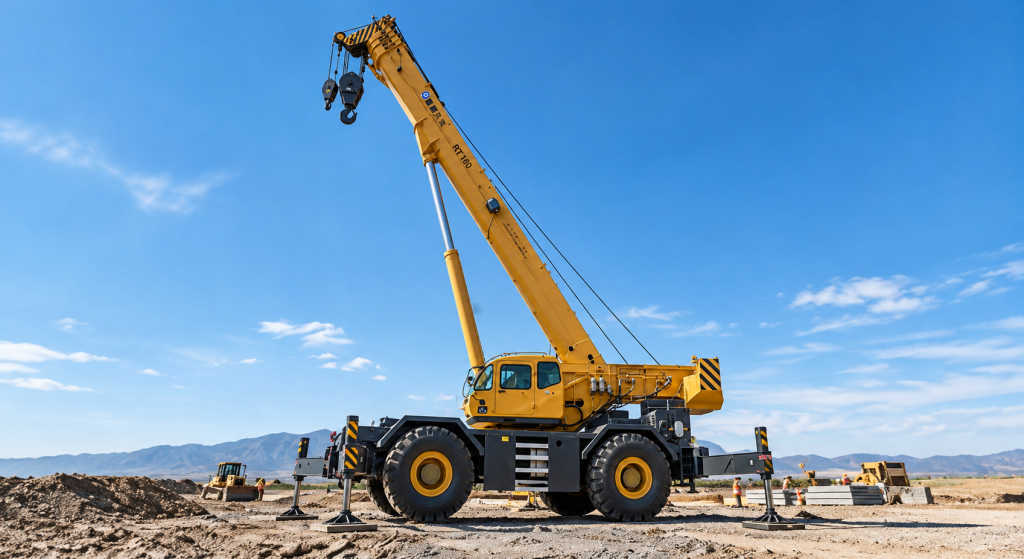
An RT crane rides on four large rubber tires, steers on all wheels, and relies on outriggers to level and stabilize before it lifts anything. A crawler crane travels on tracks, needs no outriggers at all, and can often creep across soft ground with a load already on the hook. That single difference, wheels plus outriggers versus tracks with none, drives almost every other tradeoff in this comparison.
RT cranes are built for off-road mobility between lifts on a single jobsite, not for highway travel. Crawlers are built for stability and heavy capacity once they’re parked, not for getting from site to site on their own. Neither is the same thing as a truck crane or an all-terrain crane, and lumping them together is where a lot of comparison articles go wrong. If you’re actually choosing between an RT crane and an all-terrain crane for road travel reasons, that’s a separate decision covered in Rough Terrain Crane vs All Terrain Crane: Key Differences and How to Choose. This post assumes you’ve already settled on wheels-versus-tracks and need to pick between RT and crawler specifically.
cnxjcm produces rough terrain cranes from 10 to 130 ton and builds the RT line up to 160 tons overall, which gives buyers a wide enough range to match tonnage without defaulting to a crawler just because the capacity number looks bigger.
What Type of Crane Is Ideal for Rough Terrain?
If the ground is genuinely soft, wet, or unstable, a crawler crane is the safer call. Tracks spread the machine’s weight over a much larger contact area than tires, so crawlers handle mud, sand, and loose soil with far less risk of sinkage. That’s basic ground-pressure physics: same weight, more surface area, less pressure per square inch.
Where RT cranes still win
RT cranes compensate for their smaller tire footprint with large flotation tires and all-wheel drive, and that works fine on compacted or moderately rough ground, think graded jobsite pads, gravel yards, or firm agricultural soil. Where it falls apart is genuinely soft or waterlogged ground, because outrigger setup requires a level, load-bearing pad underneath each float. If the soil can’t take that concentrated point load without settling, no amount of cribbing fully fixes it.
So the honest answer to “what type of crane is ideal for rough terrain” depends on what kind of rough terrain you mean. Off-road but structurally solid ground: RT crane. Soft or unstable ground regardless of how flat it looks: crawler. A quick soil check before mobilization settles this faster than any brochure comparison.
Can You Pick and Carry With a Rough Terrain Crane?
Yes. RT cranes are built for pick-and-carry work: lifting a load and moving it a short distance without setting it down, within a rated capacity that’s always lower than the outrigger-supported maximum. Crawler cranes generally aren’t rated for this kind of work. They’re built to lift from a fixed, leveled position, not to carry a suspended load while moving.
This distinction matters most on jobs with multiple lift points scattered across one site: foundation work where precast elements move from a laydown area to several footings, pipeline staging where sections shift along a trench, or module placement where the load effectively travels with the crane. On those jobs, an RT crane’s pick-and-carry rating can eliminate a whole category of repeated setup and teardown that a crawler would force you into.
Buyers sizing this capability against tonnage should also check how pick-and-carry capacity changes with boom configuration, covered in more detail in How to Choose the Right Crane Tonnage for Your Project (Without Overpaying).
Can You Drive a Rough Terrain Crane on the Road?
Not usually, and that surprises a lot of first-time buyers. Most RT cranes aren’t road-legal for highway travel the way a truck crane is. They’re built for jobsite mobility, not public roads, so they typically travel to site on a low-bed trailer and then drive themselves between lift points once they’re there.
Crawler cranes have it worse on this front. They almost always travel disassembled across multiple low-beds or heavy trailers because of track width, total weight, and boom length. Reassembly on site is part of the mobilization cost, not an afterthought.
Neither crane type solves the “drive it down the highway between job sites” problem the way an all-terrain or truck crane does. If that kind of road mobility is actually what you need, you’re asking the wrong comparison question, see the RT vs all-terrain comparison for that decision instead.
Setup, Teardown, and Repositioning Time
RT crane setup is largely outrigger extension and leveling. A crew can get the machine lifting in a short window, and repositioning the whole unit is as simple as driving to the next spot and setting outriggers again. Crawler crane setup is a different animal: track assembly, counterweight installation, and sometimes boom assembly on site all add crew hours before the first lift even happens. Repositioning a crawler means tracking slowly across the site or, for longer moves, partial disassembly and reloading onto trailers.
| Factor | Rough Terrain Crane | Crawler Crane |
|---|---|---|
| Initial setup | Outrigger extension and leveling | Track, counterweight, possible boom assembly |
| Move to next lift point | Drive on tires | Slow track travel or re-rig |
| Crew needed for setup | Smaller | Larger |
| Best fit | Many short-duration lifts, scattered points | One or two heavy, sustained lifts |
This is the clearest operational split in the whole comparison. Projects with many short-duration lifts at scattered points favor RT cranes every time. Projects built around one or two heavy, sustained lifts favor crawlers, because the setup cost is a one-time expense rather than something you repeat all day.
Tonnage, Lifting Charts, and Boom Length: What Actually Differs
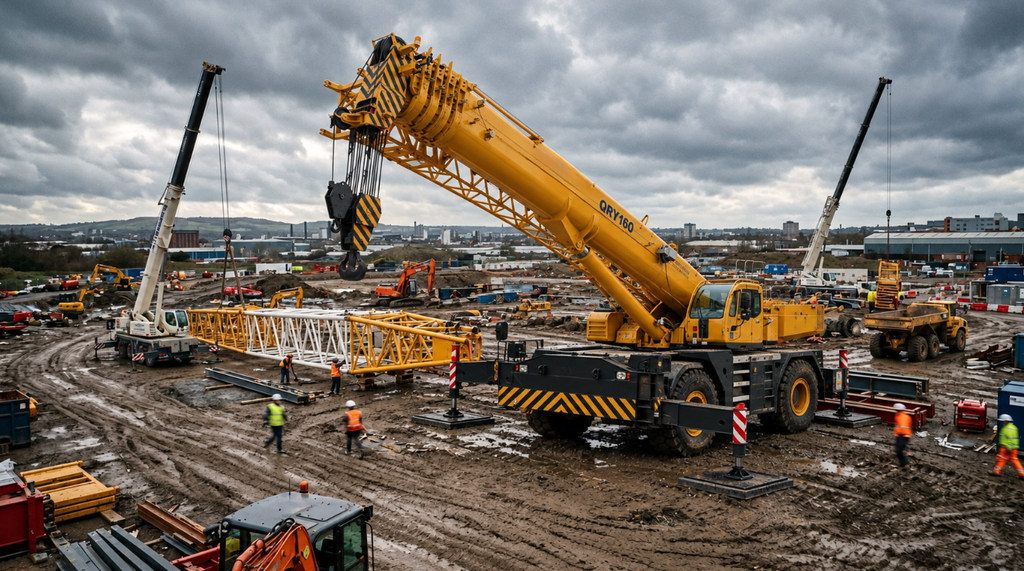
RT cranes in this category commonly span light-duty to heavy-duty tonnage, which lets buyers match capacity to a project without over-ordering a bigger machine than the job needs. cnxjcm’s RT lineup, for example, breaks into 10-50 ton, 55-80 ton, and 100-130 ton ranges, with the overall RT line extending to 160 tons. The 100 ton rough terrain crane can hoist loads up to 100 tons (200,000 pounds), with a telescopic boom that extends from roughly 30 to 150 feet or more depending on configuration.
Boom length matters more than the headline number
Boom length and configuration determine working radius more than tonnage alone. A lighter RT crane with a longer boom can outreach a heavier one with a shorter boom at the same radius, which is exactly why two quotes with different headline tonnage can end up performing almost identically on your actual lift.
Lifting charts differ by setup type too. RT capacity is rated by outrigger spread and level ground; crawler capacity is rated by track position and sometimes by counterweight configuration. When comparing two quotes, ask for the full lifting chart at your actual working radius and boom angle, not just the headline max-capacity figure. That one request will expose mismatches between two machines that look identical on paper but behave very differently once they’re set up on your site.
Total Cost of Ownership: Transport, Crew, and Permitting
RT cranes usually need one low-bed and a smaller crew for transport and setup, which keeps mobilization cost down on projects with frequent moves between sites. Crawler cranes often need multiple trailers for tracks, counterweights, and boom sections, plus a larger assembly crew, which raises mobilization cost even if the machine ends up being the right technical choice for a sustained heavy lift.
Permitting for oversize or overweight road moves applies to both machine types, but crawler disassembly and reassembly adds a time cost that needs to be priced into the project schedule, not just folded into the rental rate. That added rigging labor is real money, and it’s easy to underestimate when you’re only comparing hourly rental rates on paper.
Ground preparation cost cuts the other way. Building temporary mats or pads so an RT crane’s outriggers can bear load safely on marginal soil can quietly erase the mobilization savings you thought you were getting versus simply bringing in a crawler from the start. Run both numbers before committing, not just the crane rate.
Export Buyers: Shipping, Local Roads, and After-Sales Support
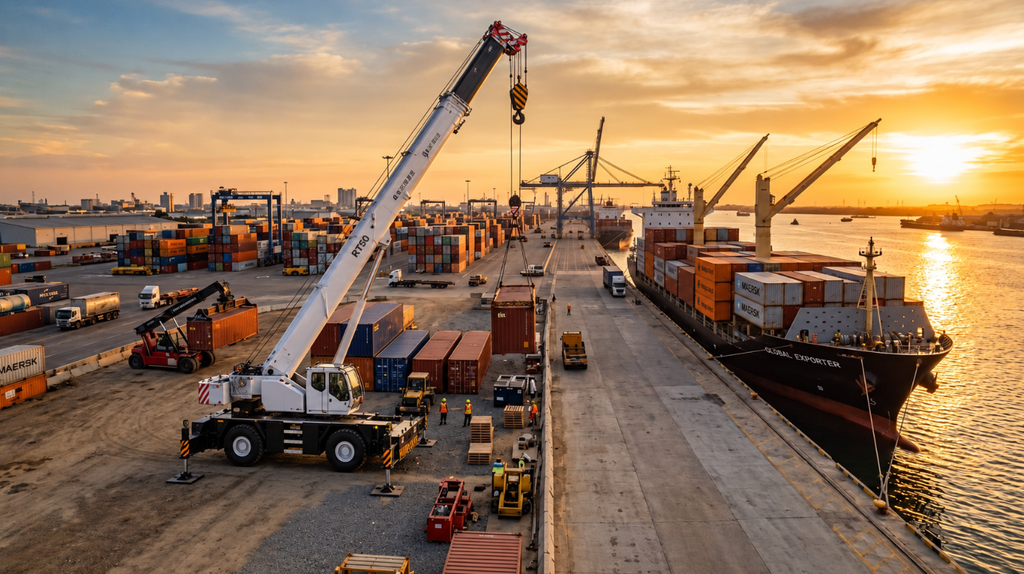
RT cranes generally ship and clear customs more straightforwardly than crawler cranes because they arrive as a single wheeled unit rather than a crane plus separate track and counterweight shipments. For buyers in Africa, the Middle East, CIS countries, and Southeast Asia, fewer containers and fewer customs line items mean fewer things that can go wrong in transit.
Local road and bridge-weight rules in many export markets also make low-bed transport of a crawler’s disassembled components a bigger logistics puzzle than moving an RT crane on its own tires once it’s in-country. If your project involves moving the crane between several sites over its working life, that difference compounds.
Spare parts and after-sales support availability should weigh heavily for any buyer far from the manufacturer. Ask any supplier directly how parts and technical support actually reach your region before signing. cnxjcm exports to more than 40 countries including Africa, the Americas, the Middle East, West Asia, Southeast Asia, and the CIS, and structural parts go through double-sided shot blasting and sandblasting for uniform near-white metal surfaces built to hold up in varied climates. Project experience with an RT crane in Morocco, a 55 ton RT crane in Russia, and a 50 ton RT crane in Qatar reflects the kind of varied terrain and climate conditions RT cranes get specified for across these export markets.
Decision Framework: Which Crane Fits Your Jobsite
- Compact urban infrastructure site with multiple lift points and decent ground: RT crane wins. Repositioning speed outweighs everything else here.
- Mining or soft-ground site with one sustained heavy lift: Crawler crane wins. Stability and capacity outweigh mobility when the ground won’t take outriggers.
- Mixed-terrain project with a tight mobilization budget and frequent moves: RT crane wins unless soil tests say otherwise. Don’t assume, test.
- Long-duration project where the crane stays in one position for weeks: The crawler’s slower setup stops mattering once it’s rigged, and its capacity advantage takes over.
- When in doubt: a soil-bearing test at the actual lift points settles the argument faster than any spec sheet comparison ever will.
None of this is really an “it depends” answer. Each scenario above has a correct choice once you know the ground and the lift pattern, and matching the machine to that pattern before you sign a rental or purchase order is what actually prevents costly mid-project swaps.
Getting the Right Crane for Your Project
Match crane type to ground conditions and repositioning frequency first, then size tonnage to the actual lift chart at your working radius, not the headline capacity number. For export buyers, factor in shipping, local road rules, and after-sales parts access as part of the real project cost, not an afterthought you deal with after the crane arrives.
cnxjcm produces rough terrain cranes from 10 to 160 tons, with more than 95% of its main crane products exported to markets across Africa, the Middle East, Southeast Asia, and the CIS. If you’re weighing an RT crane against a crawler for a specific jobsite, reach out to discuss tonnage, boom configuration, and local chassis or superstructure customization needs. A specific conversation about your ground conditions and lift pattern will get you a better answer than any generic comparison chart.
Frequently asked questions
Can you pick and carry with a rough terrain crane?
Yes. RT cranes are specifically rated for pick-and-carry work, meaning they can lift a load and drive it a short distance without setting it down, within a defined pick-and-carry capacity that’s lower than their outrigger-supported maximum. Crawler cranes generally aren’t designed for this kind of mobile lifting.
What type of crane is ideal for rough terrain?
It depends on what kind of rough terrain. For off-road but structurally solid ground, an RT crane with its flotation tires and all-wheel drive works well. For genuinely soft, wet, or unstable ground, a crawler crane’s tracks spread weight over a larger area and handle sinkage risk better.
What is the 3-3-3 rule for cranes?
The 3-3-3 rule is a rigging safety guideline, not something specific to RT or crawler cranes: check lift plans, ground conditions, and equipment setup across three key checkpoints before, during, and after the lift. Always confirm the current version with your crane’s load chart and local safety regulator, since practices vary.