Wire rope reeving determines how much load a crane can actually lift at a given boom length — not just the winch line pull rating printed on the drum. The number of parts of line strung between the boom tip and the hook block multiplies the winch’s raw pulling force, so a winch rated for 8 tons of single-line pull can safely handle a 32-ton load once it’s reeved with four parts of line. Get the reeving wrong, and you either overload the rope or leave capacity on the table you didn’t need to.
Table of contents
cnxjcm
What ‘Parts of Line’ Actually Means
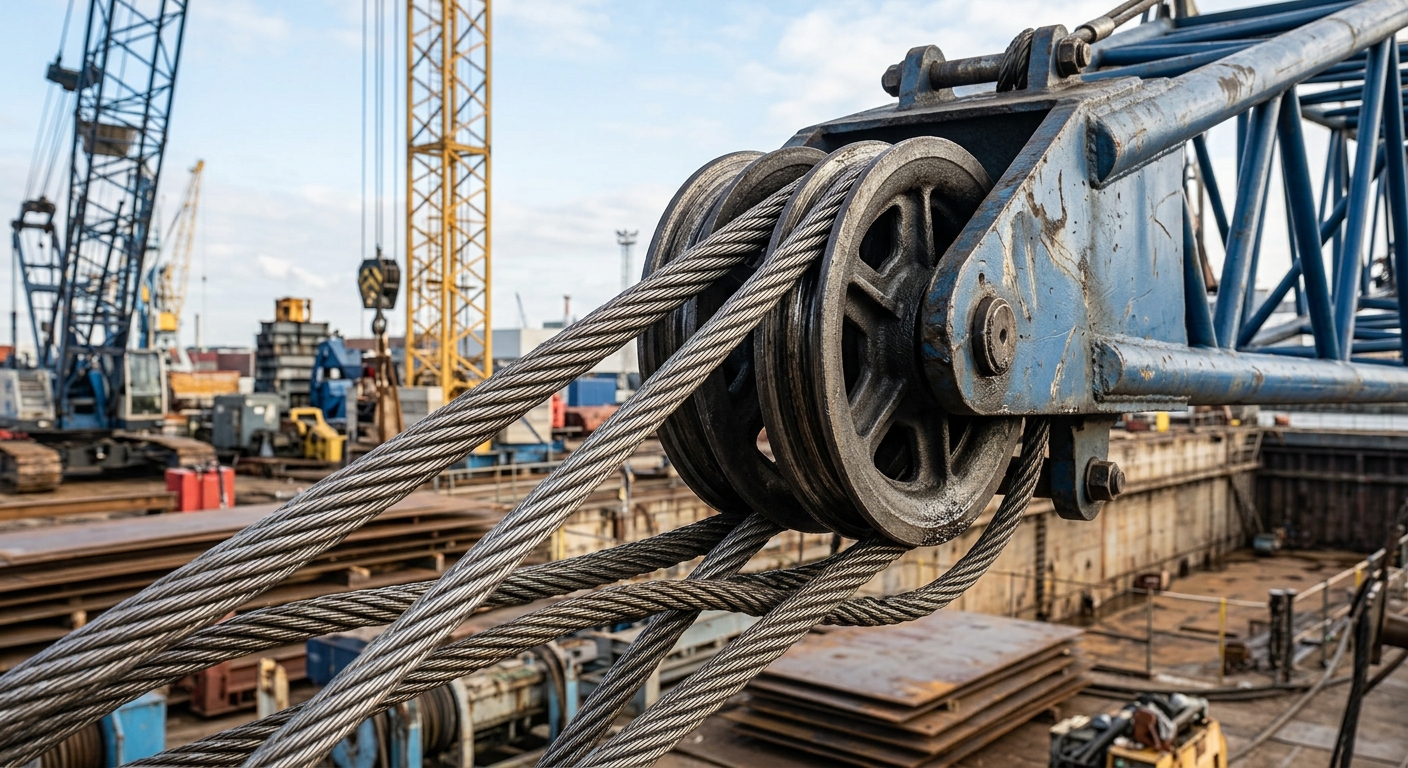
Here’s the part that trips up a lot of new riggers: the winch drum never lifts the full load directly. It pulls a single strand of wire rope, and that rope gets threaded back and forth between sheaves on the boom tip and sheaves in the hook block. Each pass between boom tip and hook block is one “part of line.” Count the number of rope strands running vertically between the boom tip and the block, and that’s your parts of line — not the number of times the rope changes direction.
A single part of line gives you a 1:1 mechanical ratio — whatever the winch pulls, the hook lifts, minus friction losses. Reeve it with four parts, and you get roughly a 4:1 advantage. That’s why cranes rated for heavy near-max-capacity lifts show up on site with the boom tip and hook block looking like a cat’s cradle of rope.
Why This Matters for Load Chart Reading
Every rated capacity chart on a rough terrain hydraulic crane assumes a specific reeving configuration at each capacity range. Pull more load than the chart allows for your current parts of line, and you’re not just risking an overload alarm — you’re risking rope failure, full stop.
The Math Behind Line Pull and Load Capacity
The formula is simple in theory, messier in practice. Theoretical lifting capacity equals line pull multiplied by parts of line, minus efficiency losses at each sheave. Every sheave the rope wraps around costs roughly 2-3% efficiency due to friction and bending resistance — even on well-lubricated bearings.
So a winch with 10,000 kg of single-line pull, reeved with 6 parts of line, doesn’t give you a clean 60,000 kg. Run that math with six sheaves in the reeving path and you’re realistically looking at 8-12% total efficiency loss, landing closer to 53,000-55,000 kg of actual capacity. This is exactly why manufacturer-published load charts always beat back-of-envelope math — they’ve already accounted for real-world friction, not theoretical numbers.
A Practical Example
Say a contractor is lifting a 45-ton precast panel at 25 meters of boom length. The chart calls for 4 parts of line minimum at that radius. If the crew mistakenly reeves only 2 parts because it’s faster to rig, the winch will hit its line pull limit long before the load leaves the ground — or worse, it’ll strain past rated pull and risk rope damage. Reeving isn’t a shortcut you take for convenience; it’s dictated by the chart, full stop.
Hook Blocks: The Overlooked Half of the Equation
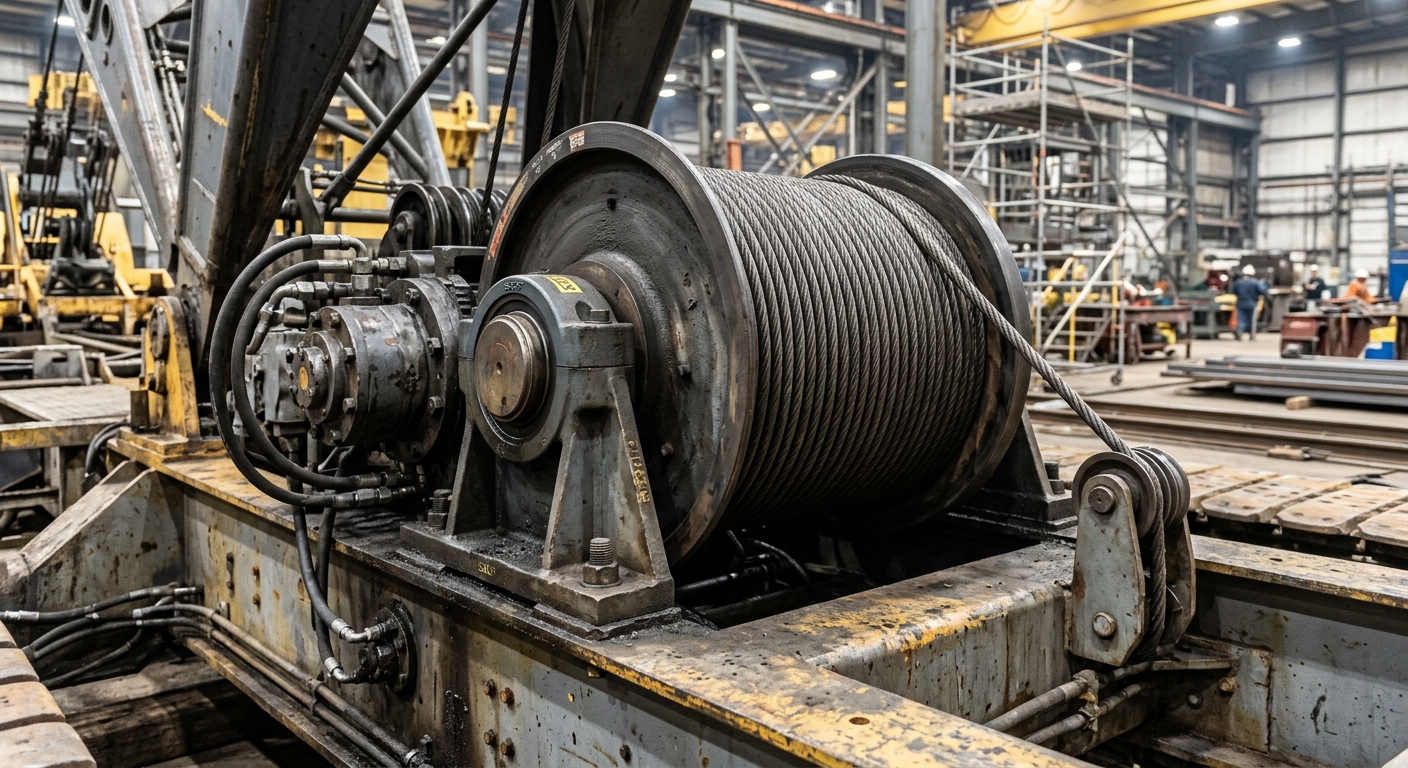
A hook block isn’t just a heavy hook with a swivel — it’s a precision-rated component with its own capacity limit, sheave count, and weight that factors into every lift plan. Buyers obsess over boom length and winch power but often treat the hook block as an afterthought. That’s a mistake.
The block’s sheave count caps how many parts of line you can physically reeve. A 2-sheave block tops out around 4 parts of line (plus a dead-end wrap); a 5-sheave block can handle up to 10-11 parts. If your lift plan calls for 6 parts of line and your crane only carries a 3-sheave block on site, you’ve got a rigging problem before you’ve even picked anything up.
Block Weight Eats Into Net Capacity
Heavy-duty hook blocks used for max-capacity lifts can weigh 500-1,500 kg depending on size. That weight comes straight out of your net lifting capacity, which is why load charts list both gross and net figures. On a 60 ton RT crane pulling close to its rated max, block selection isn’t a minor detail — it can shift usable capacity by a full ton or more.

Reading a Reeving Diagram on a Load Chart
Most operators skip straight to the capacity number and ignore the small reeving diagram printed beside it — that’s backwards. That diagram tells you the exact parts of line, boom configuration, and outrigger spread the listed capacity assumes. Change any one of those variables and the number no longer applies.
Reeving diagrams typically show a simplified boom tip with vertical lines representing rope strands, numbered 2, 4, 6, or 8. Cross-reference that number against your actual rigging before committing to a lift — not after the load is already off the ground.
Common Mistake: Assuming More Parts Is Always Safer
More parts of line does increase capacity, but it also slows hoist speed proportionally and increases the chance of rope crossing or bird-caging on the drum if spooling isn’t managed carefully. For lighter, faster-cycle lifts — like moving steel beams around a laydown yard — over-reeving just wastes time. Match the reeving to the job, not to the crane’s theoretical maximum.
Rope Diameter, Wear, and When to Re-Reeve
Wire rope diameter isn’t arbitrary — it’s matched to the drum groove, sheave groove radius, and rated breaking strength needed for the crane’s maximum reeving configuration. Swap in a slightly undersized replacement rope and you’ll accelerate groove wear on every sheave it passes through, even if it technically still fits.
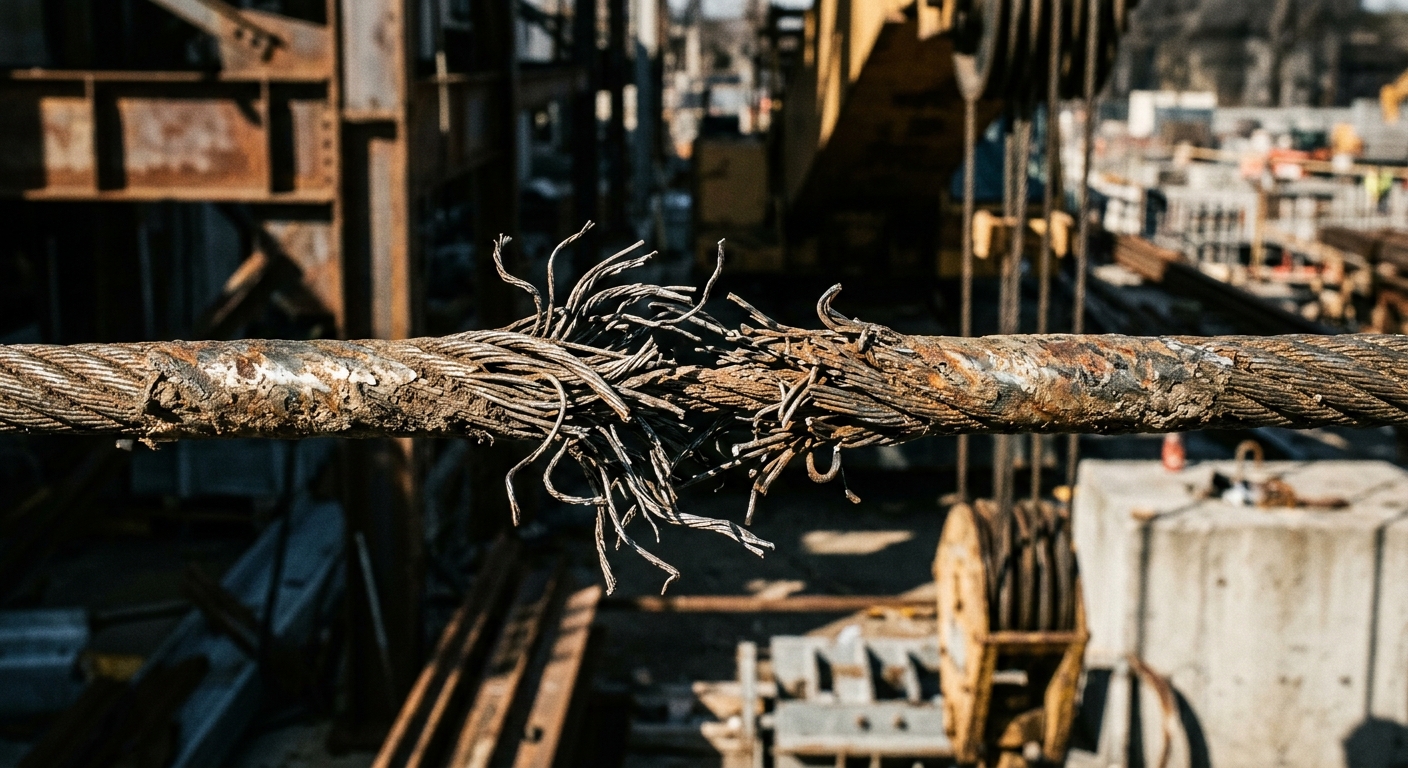
Inspect rope at every sheave contact point, not just where it’s visible on the drum. Wire breaks concentrate at pressure points — typically where the rope bends sharpest around the hook block sheaves. API and OSHA guidelines generally call for retirement once you see 6 or more randomly distributed broken wires in one rope lay, or 3 broken wires in one strand within a single lay.
Real-World Scenario
A crane rental company running a fleet of rough terrain units for pipeline support work found one crane’s rope wearing out nearly twice as fast as the others. The cause wasn’t the rope brand — it was a slightly warped boom-tip sheave from a prior overload event, chewing through wire strands every cycle. Reeving problems often trace back to hardware wear, not the rope itself.
Matching Reeving to Boom Length and Radius
Capacity doesn’t just depend on parts of line — it’s a moving target across boom length and radius, and reeving requirements shift accordingly. A crane might need only 2 parts of line at short boom and tight radius for a given load, but require 4 or 6 parts once that same load moves to full boom extension.
This is one of the biggest reasons crane selection guides emphasize matching tonnage to the actual working radius, not just the nameplate rating. Our earlier piece on choosing the right crane tonnage without overpaying covers this exact trap — buyers chase a bigger nameplate number without realizing reeving and radius will govern real-world capacity anyway.
Reeving Differences: RT Cranes vs Truck Cranes
Rough terrain cranes and truck cranes generally use similar reeving principles, but jobsite conditions push the two toward different practical setups. RT cranes working uneven ground and shorter cycle times more often run lighter reeving configurations for speed and maneuverability, especially on units like a 75 ton rough terrain crane handling frequent pick-and-carry work.
Truck cranes doing highway-adjacent or plant-yard lifts, on the other hand, often reeve heavier for sustained near-capacity picks since travel speed between lifts matters less. If you’re still deciding between the two crane types for your application, our comparison of rough terrain vs all terrain cranes digs into the broader tradeoffs beyond just reeving.
Safety Systems That Depend on Correct Reeving
Your crane’s load moment indicator (LMI) only calculates capacity correctly if it knows the actual reeving configuration — most modern systems require the operator to manually input parts of line before starting a lift. Get this wrong, and the LMI will either falsely restrict a legitimate lift or, worse, give a false green light on an overloaded configuration.
Anti-two-block sensors are also tied directly to reeving setup, since they monitor the distance between the hook block and boom tip sheaves. For a deeper look at how these systems interact, see our breakdown of mobile crane safety systems including LMI and anti-two-block protection.


