Pick your crane tonnage from the load chart at your working radius, not from the headline rating on the brochure. A 50-ton crane rarely lifts 50 tons in real conditions — at 10 meters out with a partially extended boom, that same crane may only safely handle 14–18 tons. Match the chart number to your heaviest pick, add a 20–25% safety margin, and stop there. Going bigger “just in case” is how contractors overspend by 30–40% on machines that spend half their life idling.
Start With Your Heaviest Pick — Not Your Average Lift
The single number that decides your crane size is the heaviest single load you’ll lift, at the farthest radius and height you’ll lift it from. Everything else is secondary.
Walk the site (or the drawings) and list every lift: precast panels, HVAC units, steel beams, transformers, rebar bundles. Note the weight, the distance from where the crane can park to where the load lands, and the lift height. Sort by the worst-case combination — usually the heaviest load at the longest radius. That row is your sizing target.
For instance, a contractor erecting a 6-story residential frame might assume a 25-ton crane is plenty because the heaviest precast panel is 4 tons. But if that panel needs to be placed 14 meters from the crane pad, the load chart says you actually need a 50-ton class machine. Same panel, very different crane.
The 80% rule
Never plan to lift more than 80% of the rated capacity at your working radius. The remaining 20% covers rigging weight, dynamic factors, wind, and operator margin. Plan tighter than that and you’ll start refusing lifts on hot days.

Read the Load Chart Like It Owes You Money
The load chart is the most honest document a crane manufacturer publishes. Brochures sell; load charts tell the truth.
Every chart has three axes you must check together: radius (horizontal distance from the slewing center to the hook), boom length (how far the boom is extended), and capacity (the safe working load at that combination). Capacity collapses fast as radius grows. A crane rated at 70 tons at 3 m radius might be down to 11 tons at 24 m. That’s not a defect — that’s physics.
Three columns most buyers ignore
- Outrigger position — fully extended vs. partial vs. on-tires changes capacity by 30–60%.
- Counterweight configuration — some charts assume max counterweight that isn’t standard equipment.
- Boom mode — main boom, jib, or auxiliary all have separate charts.
If you’re new to reading them, our guide on how much a rough terrain crane can actually lift walks through a real chart line by line.

Terrain Decides Crane Type — Which Then Limits Tonnage Choices
Before you finalize tonnage, decide the crane type. Tonnage availability is different across rough terrain, truck-mounted, and tower configurations.
Rough terrain cranes (10–160 t)
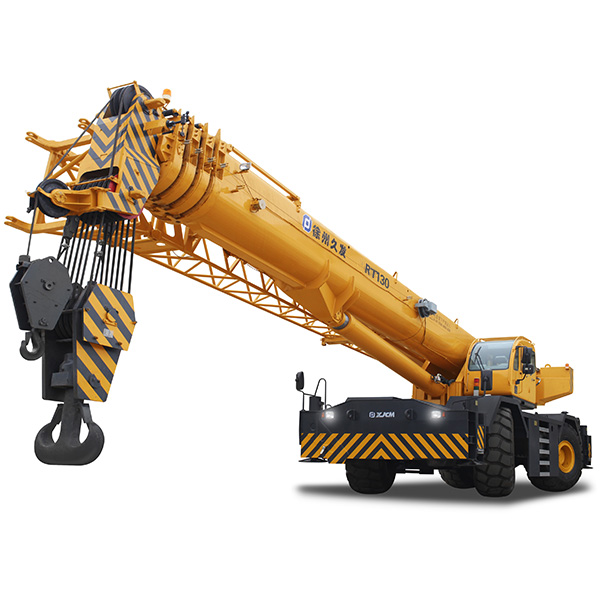
Best for off-road jobsites: oil fields, mining, wind farms, remote infrastructure. Four-wheel drive and four-wheel steer let them work where truck cranes can’t. If your access road is unpaved, browse rough terrain crane options before anything else.
Truck cranes (12–120 t)
Best when you need to move between sites in the same week on public roads. Highway-legal, faster to mobilize, but they need firm, level ground to set outriggers. A 25-ton truck crane is the workhorse for urban utility and light commercial work.
Self-erecting tower cranes (1–4 t)
Light loads but high reach and long duty cycle. Better for a 9-month residential project where a mobile crane sitting still all day would cost you a fortune in rental.
Still unsure which family fits? The crane classifications overview breaks it down by jobsite type.
The Hidden Cost of Going One Size Too Big
Bigger isn’t safer if it bankrupts the project. Oversizing carries costs that don’t show up until invoice time.
- Fuel burn jumps roughly 35–50% from a 50-ton to an 80-ton class machine — for the same lifts.
- Mobilization fees climb because larger cranes often need permits, escort vehicles, and counterweight transport on separate trucks.
- Ground prep — a 100-ton crane exerts roughly 2x the outrigger pressure of a 50-ton. You may need timber mats or compacted pads that the smaller crane wouldn’t have required.
- Operator wage tiers — in many markets, certifications scale with crane size, and so does the hourly rate.
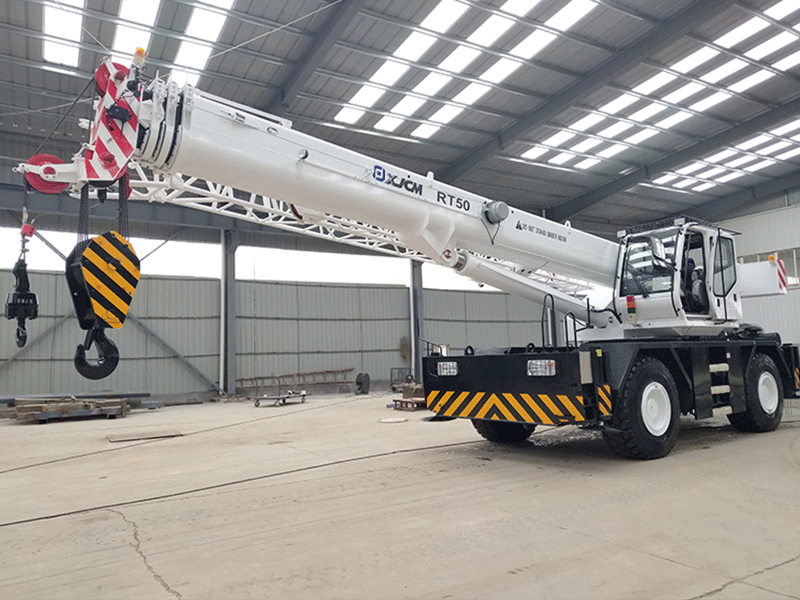
A mid-size general contractor we worked with in the Gulf had been renting an 80-ton crane for warehouse steel erection. Switching to a properly specced 50-ton RT crane cut their lift-day cost by about 28% with no change in lift schedule. The 80-ton had been doing the work — but the 50-ton could have done the same work all along.
Duty Cycle: How Often, How Long, How Hard
Tonnage isn’t only about peak load — it’s about how many lifts per day, for how many months.
A crane rated for 50 tons that lifts at 90% capacity, 40 times a day, for a year will wear faster than the same crane lifting at 60% capacity, 15 times a day. Hydraulic seals, slew bearings, wire rope, and boom pivots all age in cycles, not just hours.
Match tonnage class to duty
- Heavy duty cycle (port work, precast plants, steel mills): size up one class so you’re operating at 50–70% of capacity. Component life doubles.
- Medium duty (general construction): size at 70–80% of capacity for your heaviest regular lift.
- Light, occasional (utility maintenance, emergency response): size tight, even at 85%, since lift count is low.
This is also where rental vs. ownership math kicks in. Below 80 lift-days a year, renting almost always wins. Above 150, owning a right-sized machine pays back inside 3 years.
Reach and Height Often Matter More Than Tonnage
Here’s a counterintuitive truth: many buyers chase tonnage when they actually need reach.
If you’re erecting a 40-meter-tall communications tower with 1.5-ton sections, a 25-ton crane with a short boom is useless — but a 50-ton crane with a 42 m main boom plus jib does the job easily. You’re not paying for the 50 tons. You’re paying for the 50+ meters of hook height.
Calculate hook height honestly
Hook height = building height + load height + rigging height (slings, spreader bar) + 1.5–2 m clearance for the operator. Then check the load chart at that height, not just the max boom length, because tip height and capacity don’t peak at the same configuration.
For tall, slim structures with light loads, a self-erecting tower crane often beats any mobile crane on both cost and reach.
Three Questions That Cut Tonnage Sizing in Half
When clients call us unsure between two tonnage classes, we ask three things first. They usually answer the question in under five minutes.
1. What’s the worst-case single lift — weight, radius, height?
Not the average. Not the “most common.” The worst one.
2. Can the crane park within 6 meters of the load center?
If yes, smaller crane wins. If no — site obstructions, excavations, existing structures — radius grows fast and so does tonnage. A typical urban infill project where the crane must park across a sidewalk often needs one class larger than the loads alone would suggest.
3. How long will the crane be on site?
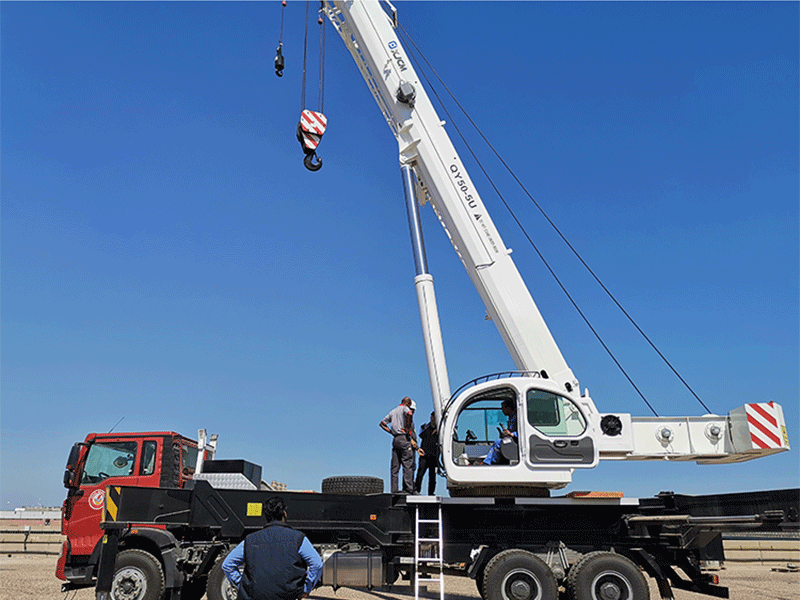
Short-term mobile lifting? A truck crane like one from our truck crane lineup. Multi-month repetitive lifting? A tower crane or dedicated RT setup. The duration changes the entire economics.
A Quick Sizing Walkthrough: 5-Story Hotel Project
Let’s put it together with a realistic example.
Project: 5-story hotel, structural steel frame, 18 m × 32 m footprint, suburban site with paved access.
Heaviest lift: Rooftop AHU unit, 4.2 tons, must land in the center of the building — 18 m from where the crane can park.
Hook height needed: 22 m (building) + 1 m (unit) + 2 m (rigging) + 2 m (clearance) = 27 m.
Sizing logic: At 18 m radius and 27 m hook height, a 25-ton crane is maxed out and unsafe. A 50-ton truck crane with 35 m boom handles 4.2 tons at 18 m radius with margin to spare. An 80-ton would also work — but at roughly 1.6x the day rate, with no schedule advantage.
Verdict: 50-ton truck crane. One day mobilization, two days of lifts, demobilization. Don’t overpay for the 80.
This is the exercise to run for every lift list before requesting quotes. It changes purchasing conversations from “we want a big crane” to “we need this specific capacity at this specific radius.” Manufacturers and rental houses respect that — and quote accordingly.
Where to Go From Here
Sizing crane tonnage well is just disciplined math: heaviest lift × worst radius × required hook height, checked against the load chart, with a 20% safety margin and a sober look at duty cycle. Do that, and you’ll consistently buy or rent the right machine — not the biggest one on the lot.
If you’re weighing specific tonnage classes against your project lift list, our team at CNXJCM can walk you through real load charts for our 25, 50, 70, and 100+ ton models, plus customization options for export-market chassis and configurations. Send us your heaviest lift and your worst radius, and we’ll send back the smallest crane that does the job safely. That’s usually the one that pays you back fastest.


