Choosing the right rough terrain crane is critical for safe lifting, efficient operation, and long-term project success. Rough terrain cranes are designed specifically for off-road environments, narrow jobsite access, and lifting operations where mobility and stability are equally important.
This guide explains how to choose the correct rough terrain crane based on lifting capacity, boom length, terrain conditions, maneuverability, and real working requirements.
Table of contents
cnxjcm
What a Rough Terrain Crane Is and When You Need One
A rough terrain crane is a mobile crane mounted on a tire-type chassis and equipped with a telescopic boom, hydraulic outriggers, and an integrated lifting system. It is designed to travel and operate on uneven surfaces where standard truck cranes cannot perform efficiently.
Rough terrain cranes are commonly used in:
- Construction sites with uneven ground
- Industrial environments requiring heavy lifting
- Outdoor oilfields
- Warehouses, freight yards, and logistics bases
- Narrow jobsite environments with limited access
These cranes provide excellent jobsite mobility, strong off-road performance, and stable lifting capability. They can move around the jobsite efficiently and perform lifting operations without requiring extensive setup time.
Step 1: Determine the Required Lifting Capacity
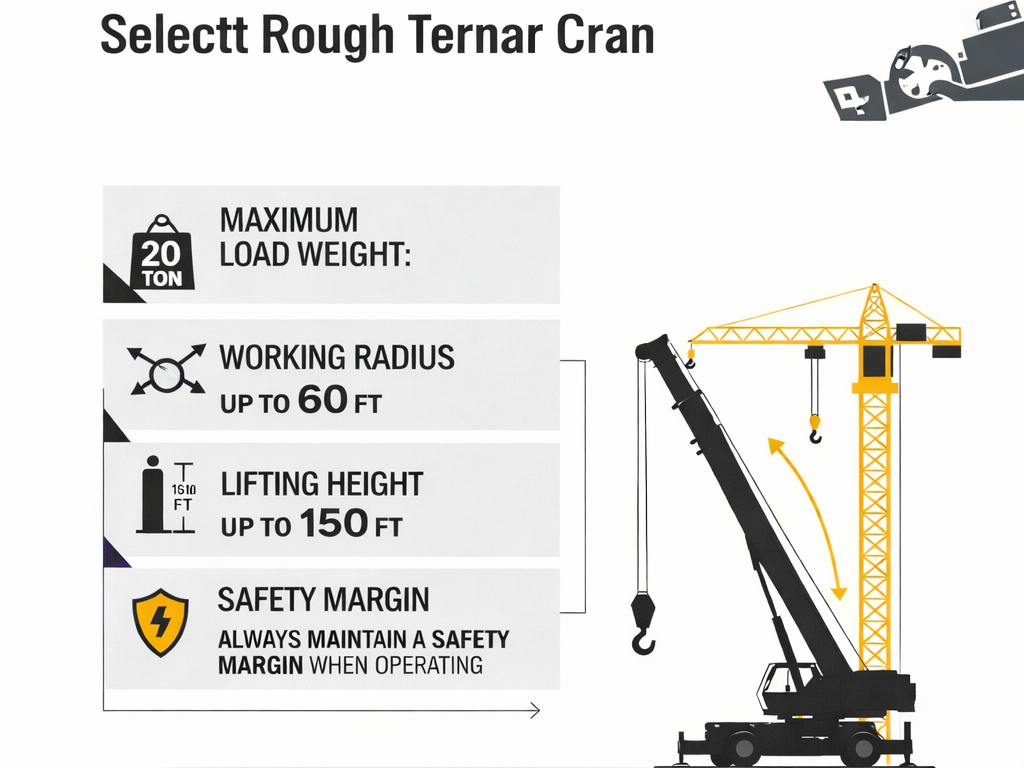
Lifting capacity is the most important factor when choosing a rough terrain crane. It determines the maximum load the crane can safely lift under specific working conditions.
XJCM rough terrain cranes cover a wide lifting range from 10 tons to 220 tons, allowing users to select the appropriate model based on real jobsite requirements.
When selecting lifting capacity, evaluate:
- Maximum load weight
- Working radius
- Lifting height
- Required safety margin
For example:
- A 10-ton rough terrain crane provides a maximum boom length of 24.6 m and is suitable for narrow-site lifting, logistics yards, and light construction work.
- A 160-ton rough terrain crane provides a maximum boom length of up to 72.5 m (with jib configuration), making it suitable for heavy lifting operations and higher reach requirements.
Always select a crane that exceeds your maximum expected load under actual working radius conditions to ensure safe operation.
Step 2: Match Boom Length to Your Lifting Height Requirements
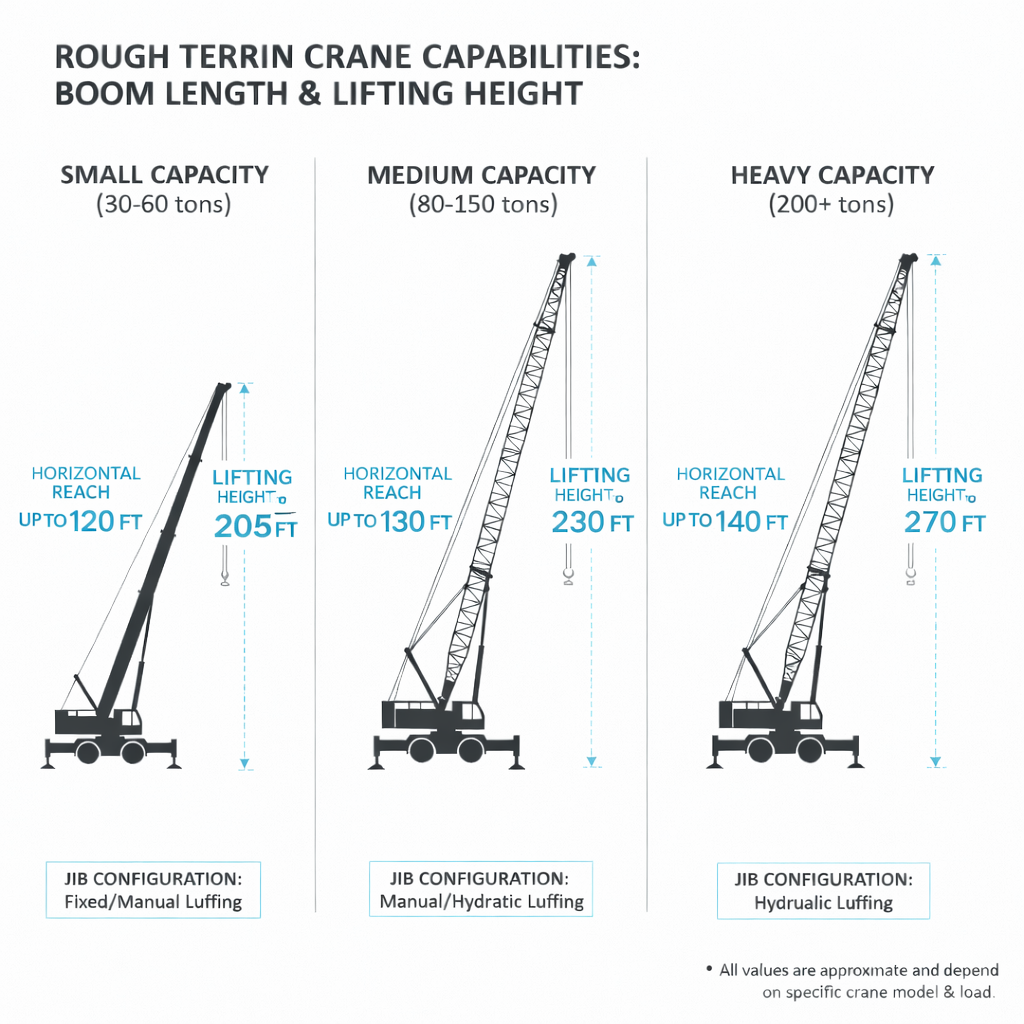
Boom length directly affects the crane’s lifting height and working radius.
XJCM rough terrain crane boom length varies by model. For example:
- 10T models provide boom lengths up to approximately 24.6 m
- Medium-capacity models provide longer reach for general construction lifting
- Heavy-capacity models such as 130T and 160T provide boom lengths up to 72.5 m with jib configuration
Key selection considerations include:
- Maximum lifting height required
- Horizontal reach requirements
- Jobsite obstacles and clearance
Longer boom length provides greater reach flexibility, but lifting capacity decreases as boom length and radius increase.
Always choose a boom length that meets your maximum lifting requirements without unnecessary oversizing.
Step 3: Evaluate Terrain and Ground Conditions
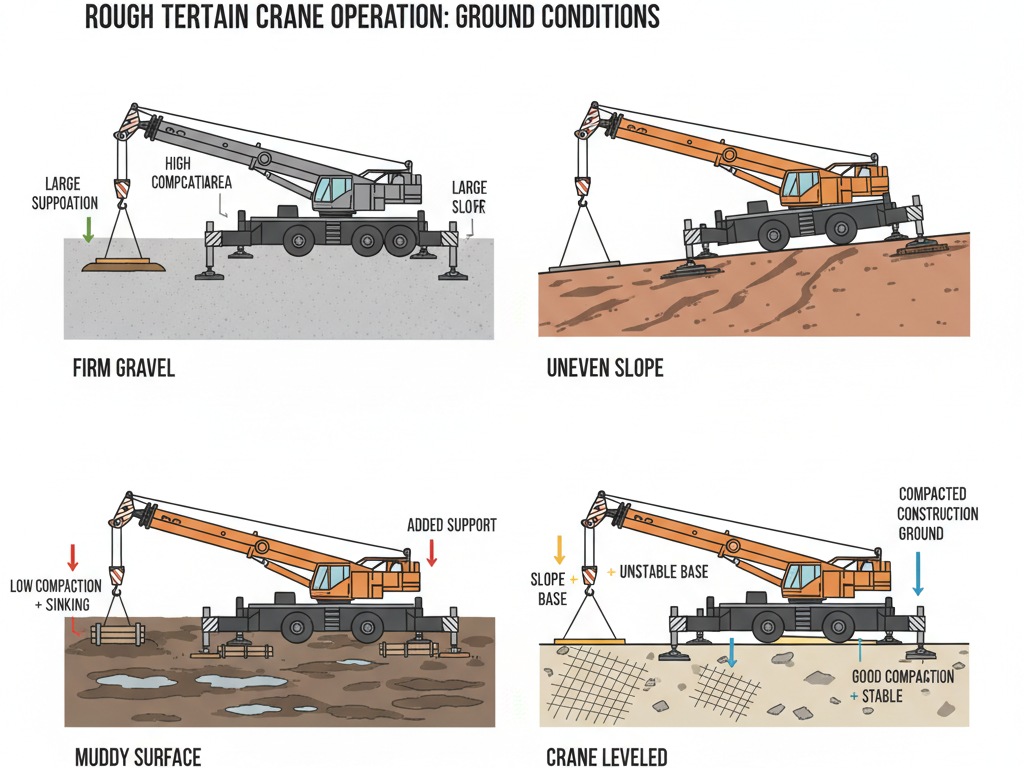
Rough terrain cranes are specifically designed for off-road environments, but terrain conditions still influence crane selection and safety.
Evaluate:
- Ground stability
- Slopes and uneven surfaces
- Mud, sand, or gravel terrain
- Jobsite access limitations
Rough terrain cranes feature:
- All-wheel drive capability
- Large rubber tires
- Strong chassis structure
- Hydraulic outriggers for stability
Proper outrigger deployment improves stability and ensures safe lifting operations on uneven surfaces.
Step 4: Consider Jobsite Space and Maneuverability
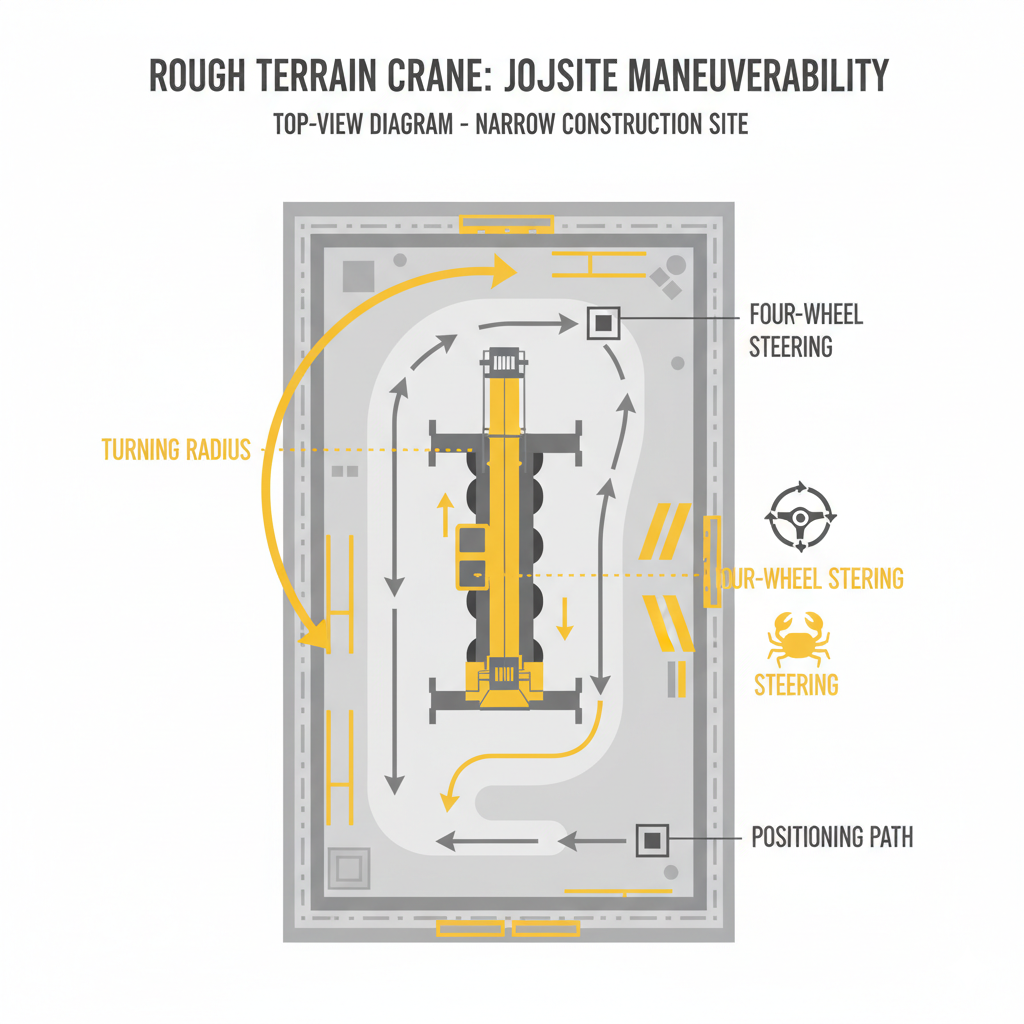
Rough terrain cranes are designed for excellent maneuverability, especially in confined jobsite environments.
Key maneuverability factors include:
- Turning radius
- Steering capability
- Machine dimensions
- Jobsite access space
Many rough terrain cranes feature multiple steering modes such as:
- Front-wheel steering
- Rear-wheel steering
- Four-wheel steering
- Crab steering
These features improve positioning accuracy and allow operation in narrow spaces.
Compact models are ideal for restricted environments, while larger models provide greater lifting capacity and reach.
Step 5: Evaluate Hydraulic System Performance
The hydraulic system controls lifting, boom extension, and overall crane operation.
A high-performance hydraulic system provides:
- Smooth lifting and lowering
- Precise boom extension and positioning
- Stable load control
- Improved operational efficiency
Reliable hydraulic performance improves lifting safety and reduces operational risk.
Step 6: Check Stability and Safety Systems
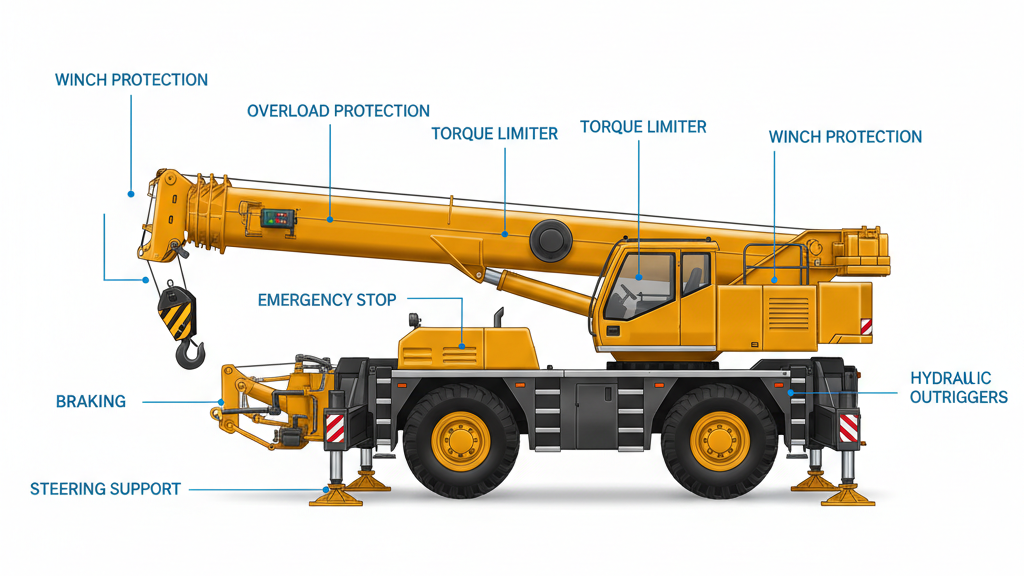
Safety features are critical for crane operation.
Important safety systems include:
- Hydraulic outriggers and outrigger locking systems
- Torque limiter and overload protection
- Winch over-winding and over-relaxation protection
- Emergency stop and emergency steering support
- Reliable braking and steering systems
These systems protect both operators and equipment during lifting operations.
Step 7: Match the Crane to Your Application Requirements
Different jobsite applications require different crane capacities and configurations.
Typical application examples include:
- Narrow construction sites requiring compact lifting equipment
- Industrial lifting operations requiring higher lifting capacity
- Oilfield operations requiring off-road mobility
- Logistics yards requiring frequent repositioning and lifting
Selecting the correct crane ensures efficient lifting, safe operation, and improved jobsite productivity.
Common Mistakes to Avoid When Selecting a Rough Terrain Crane
Avoid these common mistakes:
- Selecting capacity based only on maximum rating
- Ignoring working radius and lifting height
- Choosing oversized cranes unnecessarily
- Ignoring terrain and stability requirements
- Prioritizing price over safety and performance
Proper crane selection improves operational efficiency and reduces long-term costs.
Advantages of Rough Terrain Cranes
Rough terrain cranes provide several key advantages:
- Excellent off-road mobility
- Strong lifting capacity across various applications
- High maneuverability for narrow jobsite operation
- Stable lifting performance with hydraulic outriggers
- Efficient setup and operation
These advantages make rough terrain cranes suitable for construction, industrial, and off-road lifting operations.
Conclusion
Choosing the right rough terrain crane requires evaluating lifting capacity, boom length, terrain conditions, maneuverability, hydraulic performance, and safety systems.
XJCM rough terrain cranes, ranging from 10T to heavy-duty models, provide reliable lifting performance, strong mobility, and stable operation across a wide range of jobsite environments.
By selecting a crane that matches your actual lifting requirements and jobsite conditions, you can ensure safe, efficient, and cost-effective lifting operations.


