If you’re comparing a truck crane and a rough terrain crane, the fastest way to choose is to answer one question first: Will the crane spend more time moving between sites, or working on difficult ground?
Truck cranes prioritize road mobility and fast relocation. Rough terrain cranes prioritize traction, steering control, and stability on uneven ground. This guide explains these differences using the same terms jobsite teams use.
What a Truck Crane Is Best At
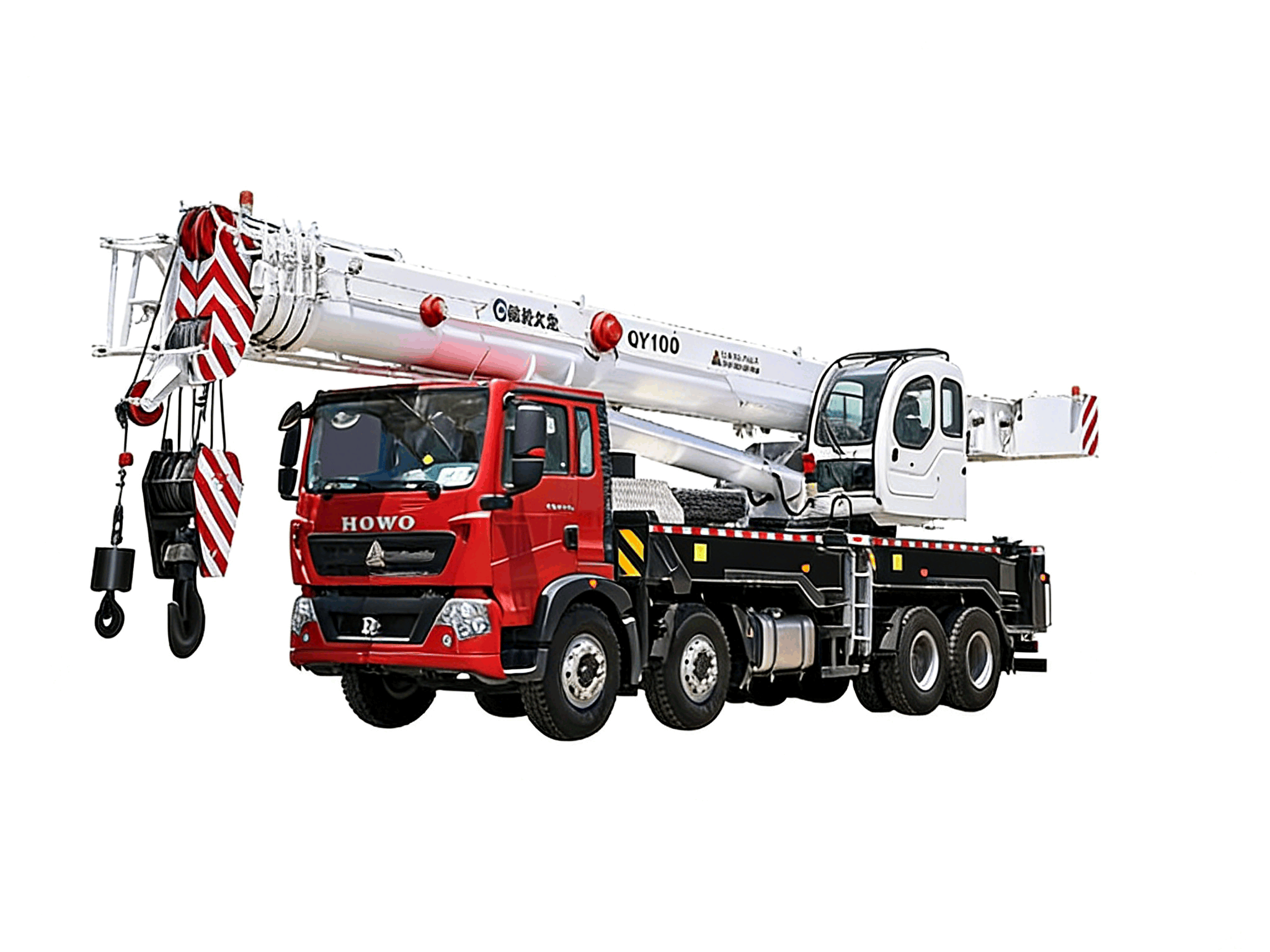
A truck crane is mounted on a road-capable truck chassis. Its main advantage is getting to the job quickly and relocating efficiently.
Truck cranes are commonly used when:
- the lift points are spread across multiple sites
- travel time and repositioning speed matter
- access roads and work pads are mostly prepared
If your project involves frequent moves, a truck crane usually reduces idle time because transport planning is simpler.
What a Rough Terrain Crane Is Best At
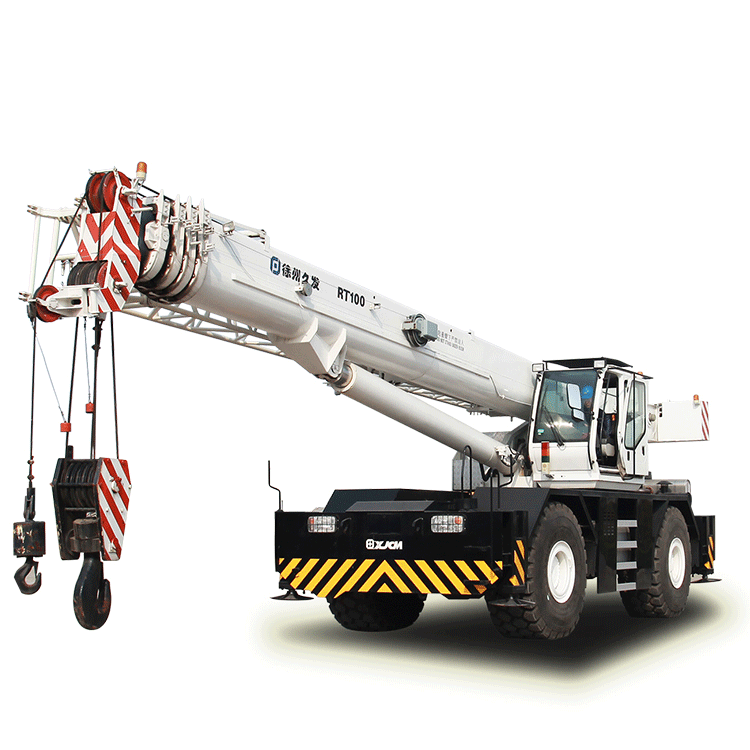
A rough terrain crane is designed for off-highway travel and lifting on uneven surfaces. Typical configurations include all-wheel drive and multiple steering modes to handle tight and unstable conditions.
Rough terrain cranes are commonly used when:
- the site is unpaved, soft, or uneven
- turning space is limited
- the crane needs controlled movement on jobsite terrain
On challenging ground, rough terrain cranes are often selected because they keep work moving when a road-focused chassis becomes a constraint.
Truck Crane vs Rough Terrain Crane: The Differences That Decide the Job
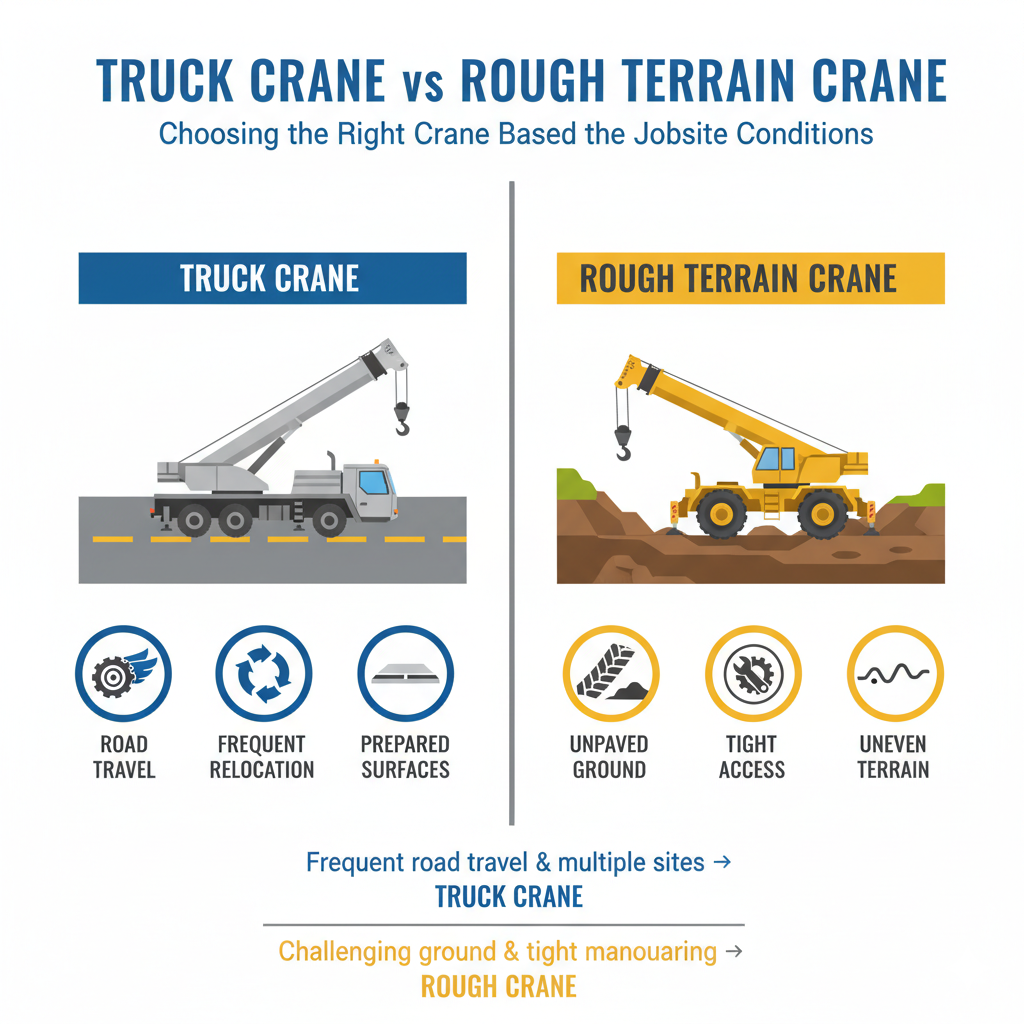
1) Road Travel and Transport Planning
- Truck crane: built to travel on roads and move between sites efficiently.
- Rough terrain crane: typically transported to the jobsite by flatbed or heavy hauler, then works mainly inside the site.
If the crane needs to change location frequently during a project, truck cranes usually have an advantage in overall scheduling.
2) Ground Conditions and Traction
- Truck crane performs best on paved or well-prepared ground.
- Rough terrain crane is built for uneven ground and off-highway travel, often with all-wheel drive and off-road steering options.
When ground conditions include mud, loose soil, ruts, or uneven grades, the machine’s ability to move and position confidently becomes a productivity factor, not just a driving feature.
3) Steering and Tight-Space Control
Rough terrain cranes are often configured with multiple steering modes such as:
- front-wheel steering
- rear-wheel steering
- four-wheel steering
- crab steering
This matters when the crane must move through narrow paths or reposition in confined areas without repeated multi-point turns.
Truck cranes usually depend more on road-style steering geometry, which can be less flexible in tight, unprepared jobsite layouts.
4) Speed vs Jobsite Maneuverability
Truck cranes typically prioritize travel speed and relocation efficiency.
Rough terrain cranes prioritize jobsite maneuverability, controlled movement, and traction—often accepting lower travel speeds in exchange for stable positioning on uneven surfaces.
5) Typical Work Patterns
A simple rule that matches how most crews operate:
Choose a truck crane when:
- your project has multiple scattered lift points
- the crane must travel long distances between locations
- roads and access lanes are mostly prepared
Choose a rough terrain crane when:
- the ground is unpredictable and unpaved
- the crane must work deep inside the jobsite
- tight maneuvering and traction are daily requirements
Quick Decision Checklist
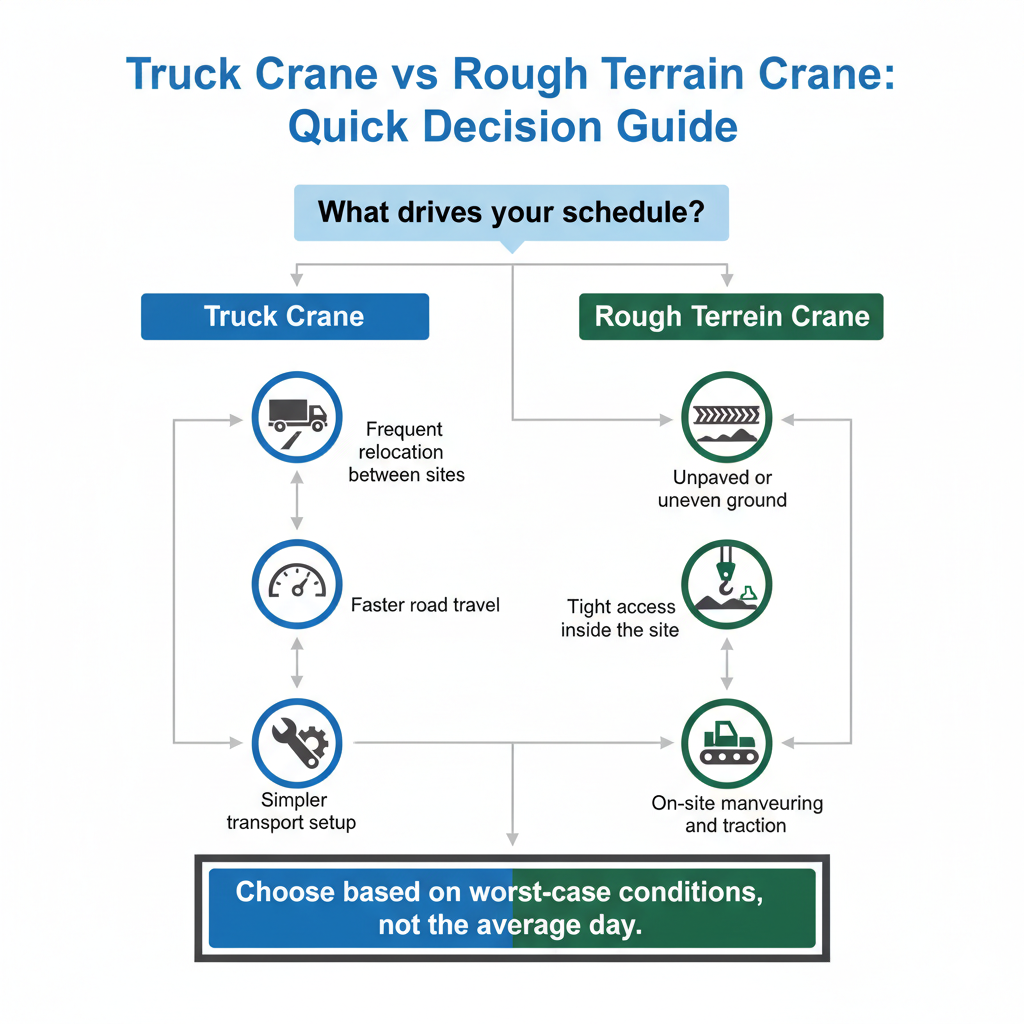
If you answer “yes” to most items in a column, that crane type is usually the better fit.
Truck Crane fits when you need:
- frequent relocation between sites
- faster road travel
- simpler transport setup
Rough Terrain Crane fits when you need:
- off-highway movement inside the site
- strong traction and steering control
- stable maneuvering on uneven ground
Conclusion
Truck cranes and rough terrain cranes are both mobile cranes, but they address different constraints. A truck crane fits schedules driven by road travel and frequent relocation, while a rough terrain crane fits schedules shaped by unpaved ground, tight access, and constant on-site repositioning.
Base the decision on worst-case conditions rather than the average day. Focus on how often relocation is required, how challenging the ground becomes, and how tight the working envelope is. The right crane is the one that keeps the lift plan executable under those constraints.


