Your imported crane keeps breaking down in hot climates because it was engineered for a 30°C European or East Asian baseline — not for the 45–55°C ambient temperatures, fine dust, and brutal solar load of the Gulf, Sahel, or tropical Southeast Asia. The fix is not more maintenance. It is specifying (or retrofitting) the right hydraulic oil grade, oversized cooling capacity, heat-resistant seals, and properly sealed electronics from day one. Below is what actually fails, why, and what to demand from your manufacturer.
Table of contents
cnxjcm
The Real Reason Standard-Spec Cranes Cook Themselves
Most imported cranes are tested and certified at 20–30°C ambient. Push that to 48°C in Riyadh in July, and every thermal margin in the machine collapses at once. Hydraulic oil that should run at 70°C now sits at 95°C+. Engine coolant flirts with the cap pressure limit. Electrical contactors derate by 25%. The crane does not have a single failure — it has a cascade.
Here is the math that most buyers miss. A hydraulic cooler sized for a 50°C oil-to-air delta works fine when ambient is 30°C (oil at 80°C). At 50°C ambient, that same cooler can only hold oil at 100°C — which is past the viscosity cliff for standard ISO VG 46. Once oil thins, internal leakage in pumps and valves jumps, output pressure sags, and the operator pushes the engine harder. More heat. Faster failure.
For instance, a rental fleet in Oman recently logged three pump failures on the same 50-ton truck crane in 14 months. The fix was not a better pump — it was a properly sized cooler and a switch to high-VI oil.
Hydraulic Systems: The First Thing to Fail Above 45°C
Hydraulics carry the lifting load, but they are also the most temperature-sensitive system on the crane. Three things go wrong fast.
Oil viscosity collapses
Standard ISO VG 46 mineral oil loses roughly half its viscosity between 40°C and 90°C. In hot ambient operation, you need a high viscosity index (VI 150+) oil, or step up to ISO VG 68. Synthetic blends hold up better but cost 2–3× more — usually worth it on cranes working daily duty cycles.
Seals harden and weep
Standard nitrile (NBR) seals are rated to about 100°C continuous. In a hot climate with sustained 95°C oil, they go brittle within months. Specify HNBR or FKM (Viton) seals on cylinders and rotary unions — they handle 150°C+ and last 3–4× longer.
Pumps cavitate on hot starts
Sun-soaked oil at 60°C in the morning is already thin. Cold-blooded suction lines were not designed for this. Insulating the suction side and adding a small charge pump on the main circuit eliminates cavitation noise on startup.
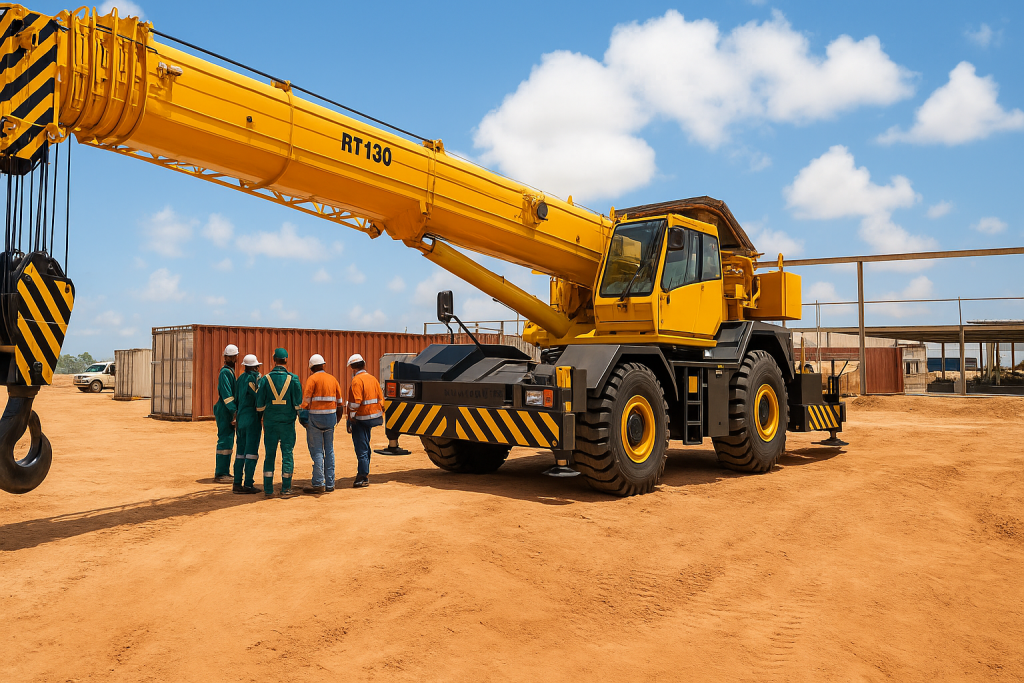
If you are evaluating crane suppliers, ask specifically what oil grade ships from the factory and whether seal upgrades are available. Our RT crane platform ships with HNBR seals and VG 68 oil as standard for export to high-temperature markets.
Cooling Capacity Is Almost Always Undersized
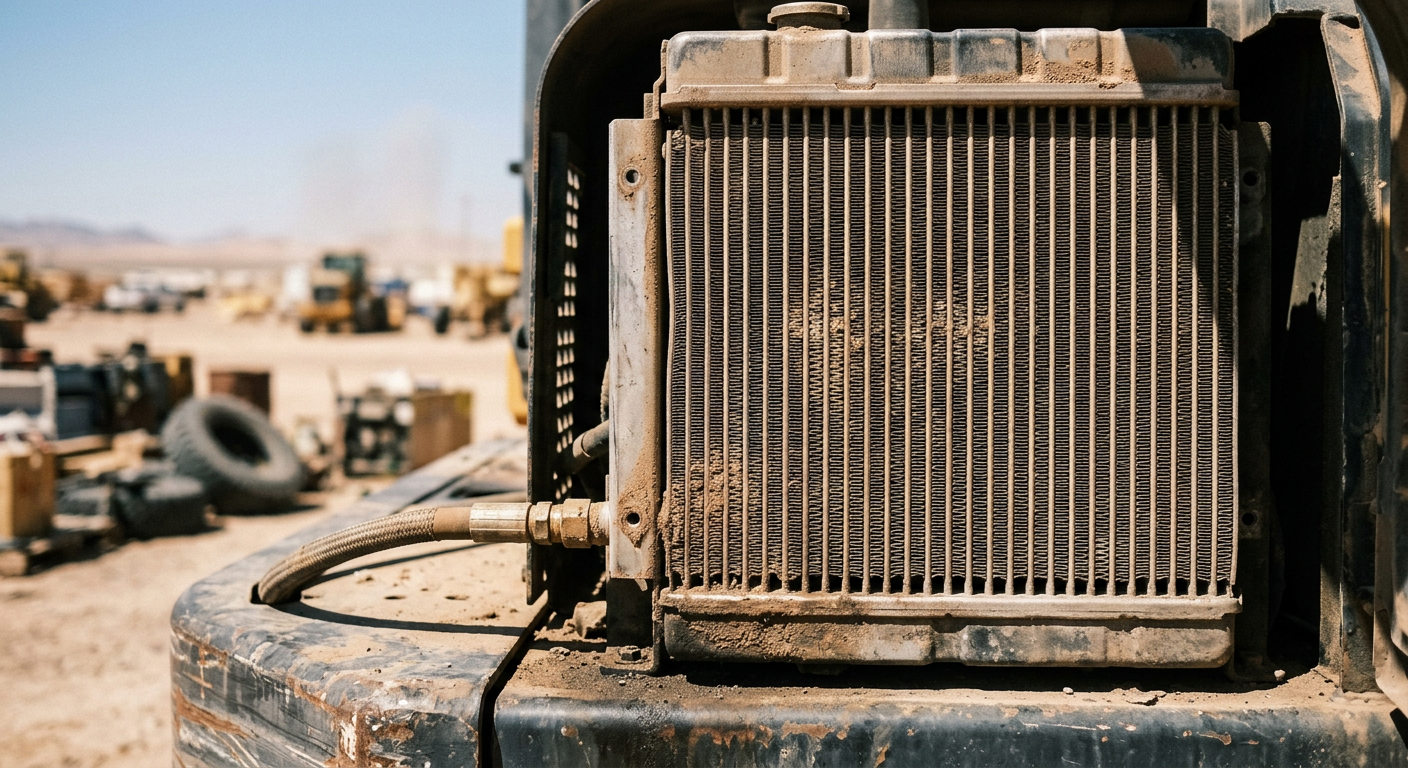
Walk around any imported crane on a hot jobsite and put your hand near the radiator — not on it, you will burn yourself. Most cooling packages were sized with a 20°C safety margin that disappears in the desert.
What to demand from the manufacturer:
- Oil cooler oversized by 30–40% relative to the standard spec, or a dual-circuit cooler with hydraulic oil and transmission oil separated.
- Variable-speed cooling fans driven by oil temperature, not engine RPM. Fixed fans either over-cool at idle or under-cool at low engine speed during precision lifts.
- Dust pre-screens with reverse-flow purge. Fine sand clogs cooling fins within hours in some regions. A simple mesh pre-filter that an operator can blow out at lunch saves a full radiator pull every quarter.
- Copper-brass radiators over aluminum for high-dust environments — heavier and pricier, but more durable against sandblast erosion.
A 60-ton rough terrain crane working oil-field tie-ins in southern Iraq saw cooling-related downtime drop from 11% to under 2% after the operator added a secondary oil-to-air cooler and switched to a thermostatically controlled fan. That is the kind of retrofit that pays for itself in one quarter.
Electronics, Cabin AC, and the Hidden 50°C Killer
Operators talk about hydraulics. Procurement talks about engines. Almost nobody talks about the electrical cabinet — which is where modern cranes increasingly fail first.
CAN-bus controllers, load moment indicators (LMI), and PLCs are typically rated to 70°C internal temperature. Inside a steel cabinet sitting in direct sun, internal temps hit 80–85°C easily. Capacitors dry out. Solder joints fatigue. The crane throws a fault code that no one can diagnose because it only appears at 2 PM.
What actually works
- IP65-rated, sun-shielded enclosures with internal cooling fans or thermoelectric coolers.
- UV-resistant cable jackets — standard PVC cracks within 18 months under Middle East sun.
- Contactors and relays derated by 25% to compensate for high-ambient performance loss.
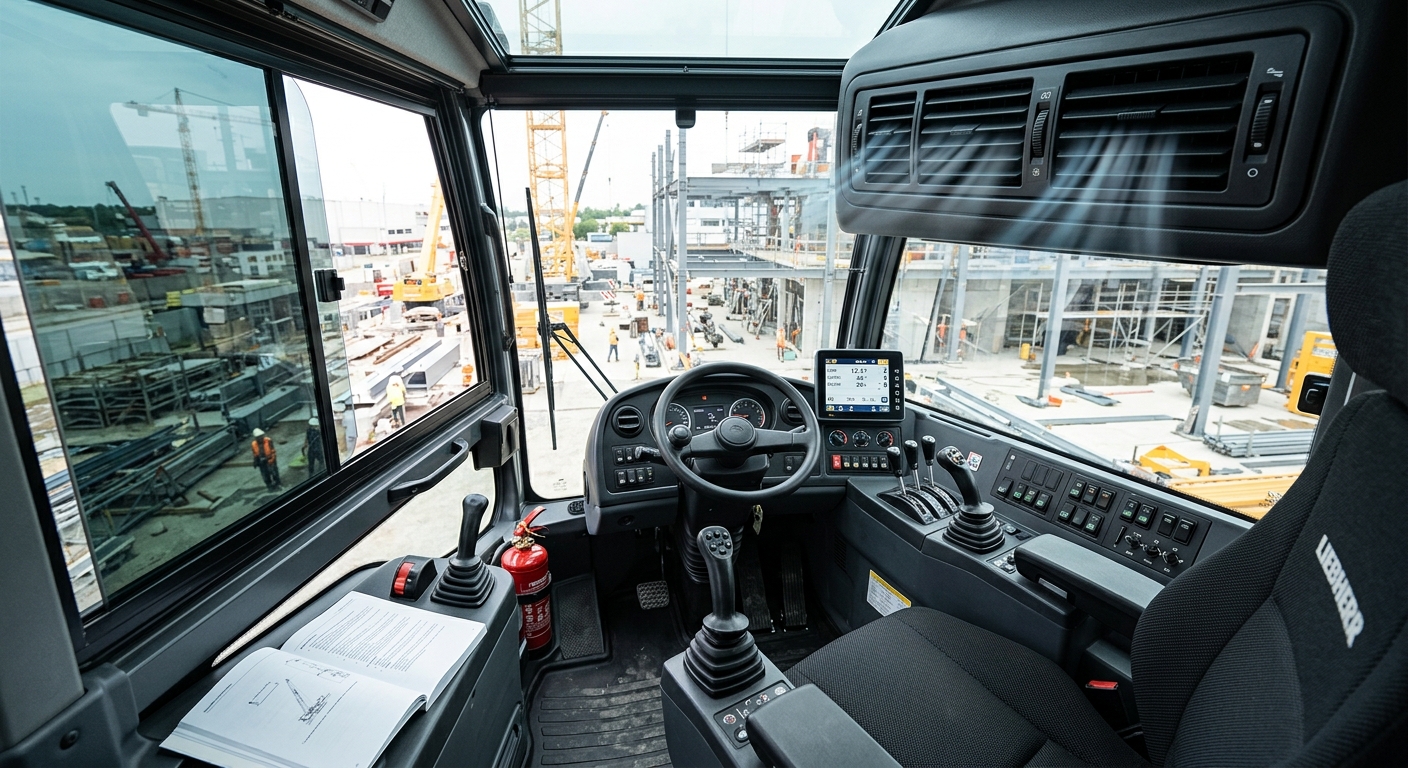
- Cabin air conditioning sized at minimum 14,000 BTU with dual filters (dust + pollen). The cheap residential-style 8,000 BTU unit on many imports fails within a single summer.
The cabin AC point matters more than people think. An operator working in a 45°C cabin makes mistakes. Mistakes break booms. We have seen multiple insurance claims trace back to operator fatigue from a failed AC unit.
Tires, Outriggers, and the Ground You’re Lifting On
Hot climates do not just attack the machine — they attack the contact patch. Asphalt at 60°C surface temperature softens enough that outrigger pads sink under load. Sand temperatures hit 70°C+, which cooks the rubber of standing tires.
Three field-proven fixes:
- Larger outrigger pads — for hot asphalt and soft desert terrain, pads need to be 30–50% larger than the standard European spec.
- Heat-resistant tire compounds. Standard radials sitting in 70°C sand for hours develop sidewall cracks within a season. Specify desert-rated compounds or rotate the crane position daily.
- Avoid prolonged static loading. A crane left set up for a 3-day lift on hot asphalt will literally press the outriggers into the surface. Plan for steel pad mats on any concrete or asphalt above 50°C surface temp.
This is one reason rough terrain cranes often outperform truck-mounted units in hot, soft, or remote terrain — they are built around the assumption that the ground is the enemy.
What Spec Sheet Items Actually Matter When You Order
If you are buying a crane for export to a hot region, do not just compare tonnage and boom length. Push the manufacturer for a written hot-climate spec. Here is what to ask for in the quote:
- Maximum continuous ambient operating temperature (target: 50°C minimum, ideally 55°C).
- Hydraulic oil grade shipped from factory and recommended VI.
- Cooler oversize percentage versus standard spec.
- Seal compound on all cylinders and the swing bearing.
- Cabin AC BTU rating and filter type.
- Electrical enclosure IP rating and cable UV rating.
- Radiator material and fin pitch (wider fin pitch resists dust clogging).
- Spare parts availability in your region — this matters more than the spec itself when something does fail.
Reputable Chinese manufacturers with serious export experience to the Middle East and Africa will have a standard “tropical” or “desert” package. If your supplier looks blank when you ask, that is your answer. A good truck crane manufacturer should be able to send you the hot-climate spec sheet within a day.
Retrofit Options if You Already Own a Standard-Spec Crane
Maybe you already imported the crane and the failures started in month three. You are not stuck. Most of the hot-climate gap can be closed with retrofits, in roughly this priority order:
- Switch hydraulic oil to high-VI ISO VG 68 at the next service. Cheapest, fastest improvement. Drop oil temp 5–10°C immediately.
- Add an auxiliary oil cooler on the return line. Plug-and-play kits exist from most major hydraulic suppliers for under USD 2,000 installed.
- Upgrade the cabin AC to a heavy-duty 12V/24V unit with proper dust filtration. Operator productivity alone justifies it.
- Install a sun-shade canopy over the electrical cabinet. Sounds primitive — drops internal cabinet temperature by 15°C.
- Replace cylinder seals at next overhaul with HNBR or Viton. Do not wait for them to fail; plan it into scheduled maintenance.
A distributor in West Africa retrofitted six 25-ton truck cranes with this exact sequence. Unscheduled downtime dropped from 18 days per crane per year to under 5. The retrofit cost averaged USD 4,800 per machine and paid back in under six months on rental utilization alone.
Maintenance Habits That Actually Move the Needle
You can spec the perfect crane and still break it with European maintenance intervals. Hot climates compress service schedules — sometimes by half.
- Hydraulic oil sampling every 250 hours, not 500. Heat oxidizes oil faster, and an oil analysis costs USD 30.
- Air filter blowdown daily in dusty regions. Restricted intake = hotter engine = hotter everything downstream.
- Radiator cleaning weekly, not monthly. Compressed air from the engine side outward.
- Grease points twice as often. High temperatures thin grease and accelerate washout from swing bearings and boom slides.
- Park in shade or under tarp covers when idle. Solar load on a parked crane heats the cabin to 70°C+ — that is what kills your electronics during the night even before you start the engine.
None of this is glamorous. All of it works.
Buying Smart for the Climate You Actually Operate In
The pattern across every breakdown story is the same: a crane was bought on tonnage and price, not on whether it was built for the environment it would work in. A 50-ton crane that runs reliably 350 days a year beats a 60-ton crane that spends 40 days waiting for a hydraulic pump from overseas.
When you are sourcing your next unit, talk to a manufacturer with proven export volume into your specific region. Ask for references from operators in similar conditions. Get the hot-climate spec sheet in writing. And budget 5–8% above the standard price for the upgrade package — it is the cheapest insurance you will ever buy.
If you are sizing a fleet for Gulf, African, or Southeast Asian operations and want a straight answer on what specs your application actually needs, reach out to the engineering team at cnxjcm. We have shipped cranes into 40+ countries — including some of the hottest jobsites on the planet — and we will tell you honestly which upgrades are worth paying for and which are not.


