Een telescoopkraanmast begeeft het zelden zonder waarschuwing — hij laat het ruim van tevoren weten via versleten slijtdelen, losse pennen, gerafelde kabelstrengen en cilinders die onder belasting wegzakken. De vier systemen die er het meest toe doen zijn de slijtdelen van de mast, de telescopische en verbindingspennen, het kabelschijfsysteem en de hydraulische cilinders die de mast uitschuiven en hijsen. Pak problemen in deze vier gebieden vroeg aan, en je voorkomt het soort storing dat een kraan weken in plaats van uren stillegt.
Waarom slijtdelen van de mast sneller falen dan operators verwachten
Hier is een cijfer dat veel vlootbeheerders verrast: slijtdelen op een intensief gebruikte ruwterreinmast kunnen in minder dan 18 maanden de helft van hun dikte verliezen. Dat is geen fabricagefout — het is wrijving die zijn werk doet, en precies daarom zijn slijtdelen in de eerste plaats vervangbaar ontworpen.
Slijtdelen zitten tussen de telescopische mastdelen, en hun taak is simpel: voorkomen dat staal staal raakt terwijl de delen onder belasting in- en uitschuiven. Wanneer ze ongelijkmatig dunner worden, krijg je zijdelingse speling in de mast — wat zich uit als een subtiel wiebelen tijdens het uitschuiven, of erger: metaal-op-metaalcontact dat het binnenoppervlak van de mast beschadigt.
Wat je echt moet controleren
- Meet de dikte van de slijtdelen op meerdere punten, niet alleen in het midden — ongelijkmatige slijtage betekent meestal dat de mast een zijbelasting draagt die er niet hoort te zijn.
- Luister naar gerammel bij het uitschuiven of inschuiven zonder belasting. Een stille mast die plotseling lawaai maakt, vertelt je iets.
- Controleer de spelingseis voor mastdelen in de OEM-handleiding — de meeste fabrikanten geven een maximale speling aan voordat slijtdelen moeten worden opgevuld of vervangen.
Een kraanverhuurbedrijf dat een ruwterreinmast van 25 ton op een steengroeve inzet, slijt slijtdelen sneller dan een bedrijf dat af en toe hijst in een opslagterrein — stof en gruis versnellen de slijtage enorm. Als je machine in abrasieve omgevingen werkt, halveer dan je inspectie-interval.
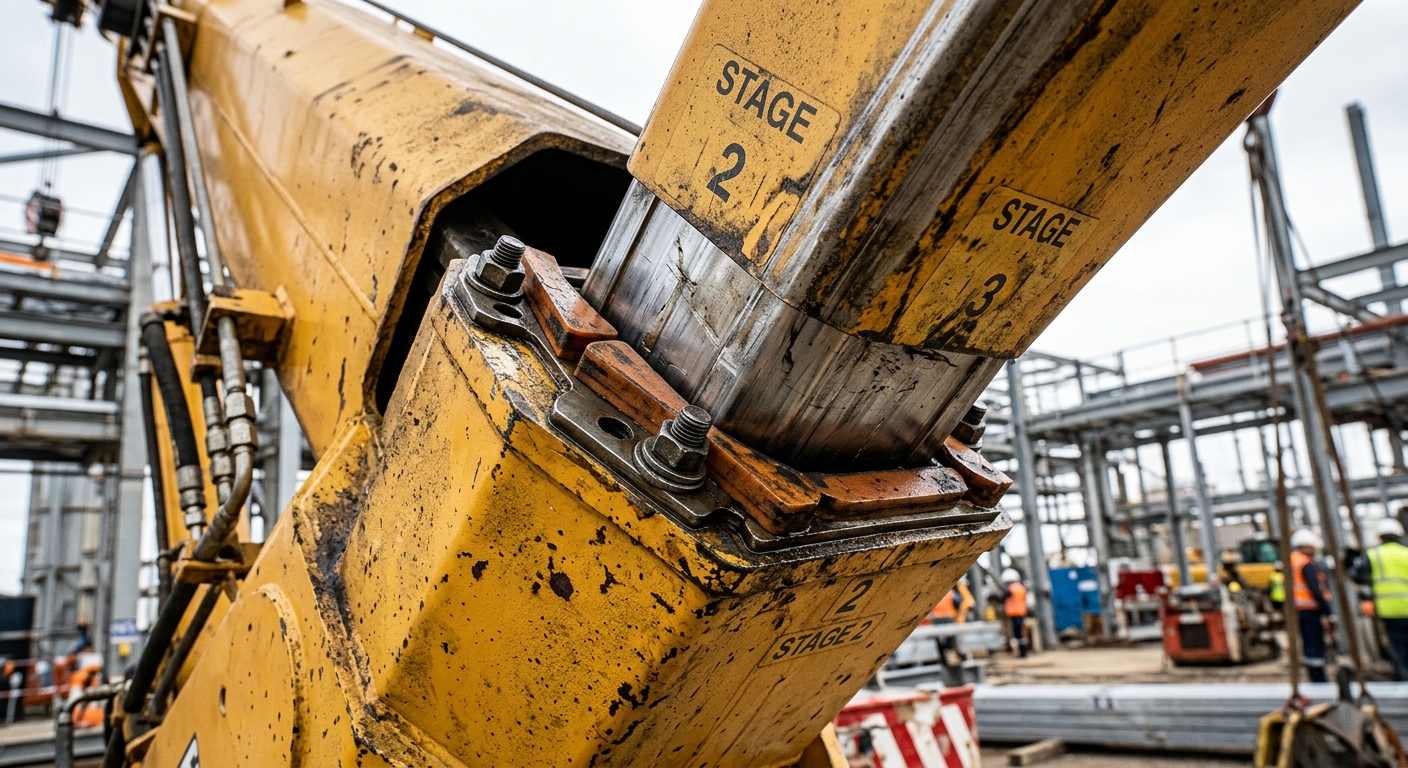
Mastpennen: de kleine onderdelen die grote stilstand veroorzaken
Een versleten mastpen piept niet alleen — hij kan de krachtpaden door de hele mastconstructie verleggen. Pennen verbinden mastdelen, de uitschuifcilinder en het basisdeel met het onderstel, en elke verlenging van het pengat betekent dat de verbinding niet meer zo star is als ontworpen.
De klaptest
Operators merken pennenslijtage vaak op voordat iemand een meting uitvoert — er is een duidelijke klap wanneer de belasting van statisch naar dynamisch overgaat, vooral tijdens het omhoog brengen van de mast of het zwenken. Die klap is speling in de pen-buspassing, en die wordt met de tijd alleen maar erger.
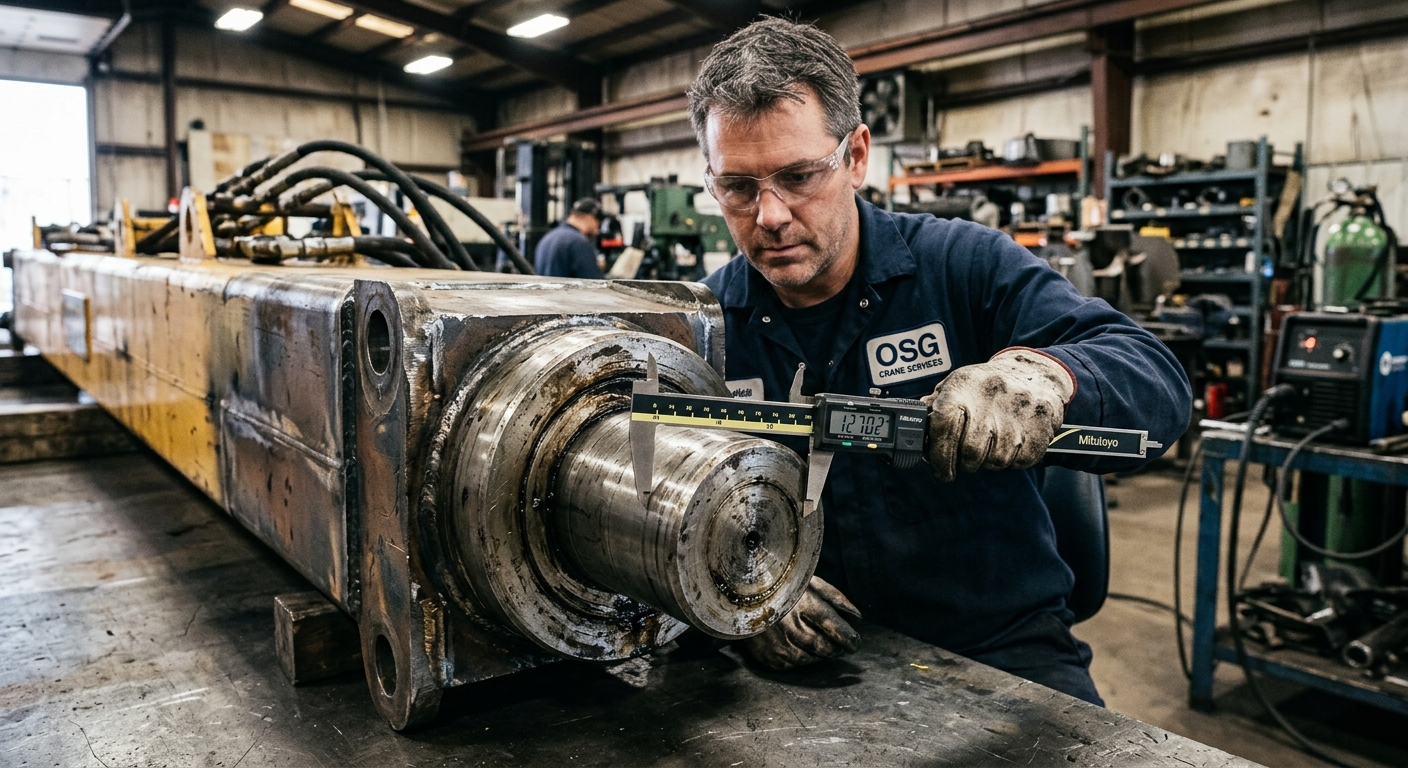
Voor de meeste kranen in de klasse 25-50 ton ligt de acceptabele speling tussen pen en bus in de orde van 0,3-0,8 mm, afhankelijk van de pendiameter. Daarbuiten krijg je versnelde slijtage van de busboring, wat een veel duurdere reparatie is dan het vervangen van een pen.
Voor teams die met ruwterreinmasten in meerdere tonnageklassen werken, maakt een gestandaardiseerd peninspectielog per eenheid het veel gemakkelijker om een trend te signaleren voordat deze een storing wordt — vooral handig wanneer vlootbeheerders slijtagepercentages tussen verschillende werkomstandigheden vergelijken.
Staalkabelinspectie: gebroken draden tellen is niet optioneel
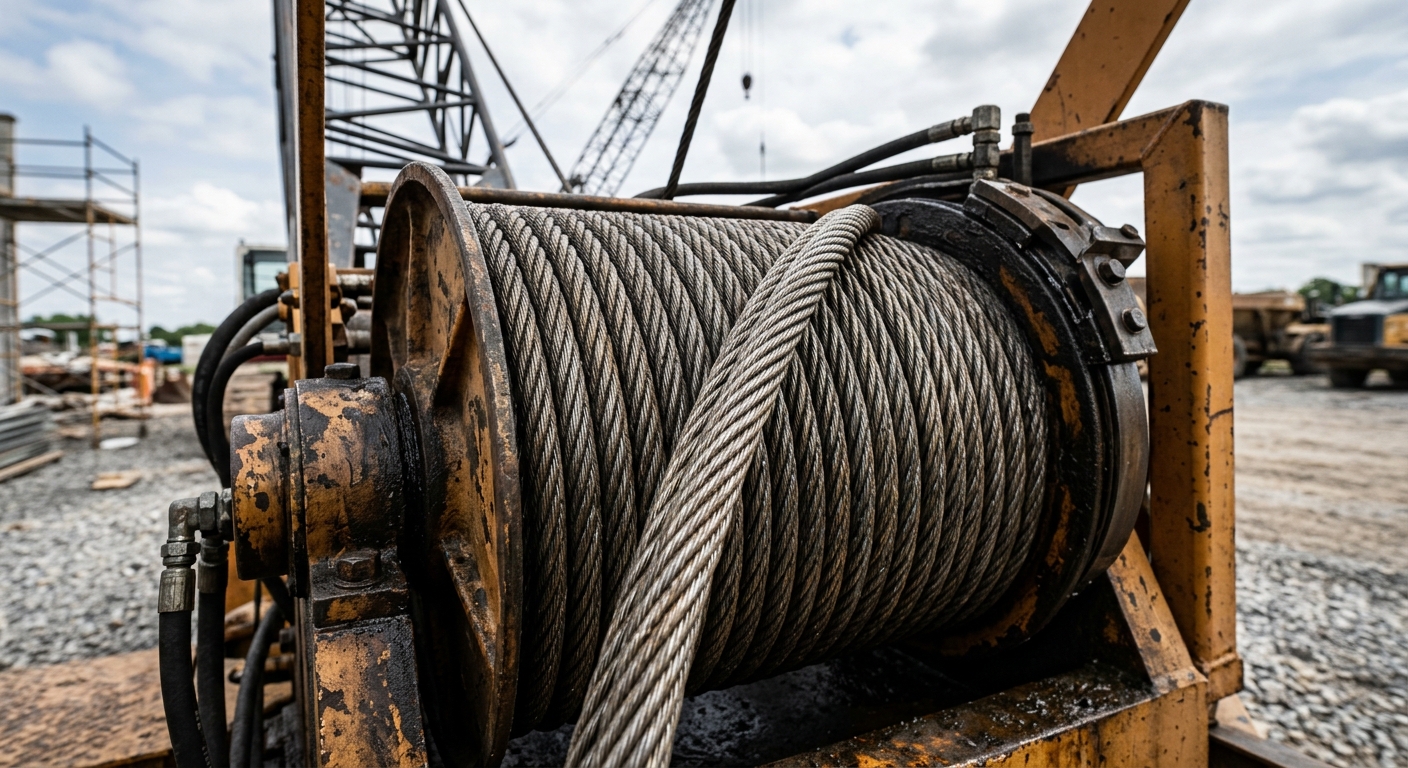
Zes gebroken draden willekeurig verdeeld over één kabelslag is de algemeen gehanteerde drempel voor het buiten dienst stellen van een staalkabel op de meeste mobiele kranen — en toch slaan veel inspecties deze telling volledig over en beoordelen ze alleen op zichtbare schade. Dat is een fout die echte ongelukken heeft veroorzaakt.
Wat een grondige controle echt inhoudt
- Draai de kabel volledig uit en inspecteer hem in secties, niet alleen het zichtbare deel op de trommel.
- Controleer op birdcaging (strengen die naar buiten wijken) — dit gebeurt vaak na een plotselinge lastafgifte en is een automatische reden voor buitendienststelling.
- Kijk eerst naar het touw bij de boomtop en het lasblok — daar concentreert zich vermoeidheid door herhaald buigen over schijven.
- Controleer op corrosieputjes, vooral bij kranen die op kustlocaties of op plaatsen met hoge luchtvochtigheid hebben gewerkt.
Een kraanverhuurbedrijf dat bijvoorbeeld een 60-tons autokraan inzette op een havenproject meldde al na acht maanden ongewone touwslijtage bij de tweede schijf — de schijf bleek verkeerd uitgelijnd, waardoor het touw schuin liep en de slijtage aan één kant versnelde. Het verhelpen van de schijfuitlijning loste een probleem op dat er anders als vroegtijdige touwbreuk had uitgezien.
Smering is ook belangrijker dan de meeste ploegen beseffen. Een droog staaldraadtouw kan aanzienlijk minder vermoeiingslevensduur hebben dan een goed gesmeerd touw — het is een van de goedkoopste onderhoudspunten van de hele kraan en een van de meest overgeslagen.
Drift van hydraulische cilinders: de stille killer van hefvermogen
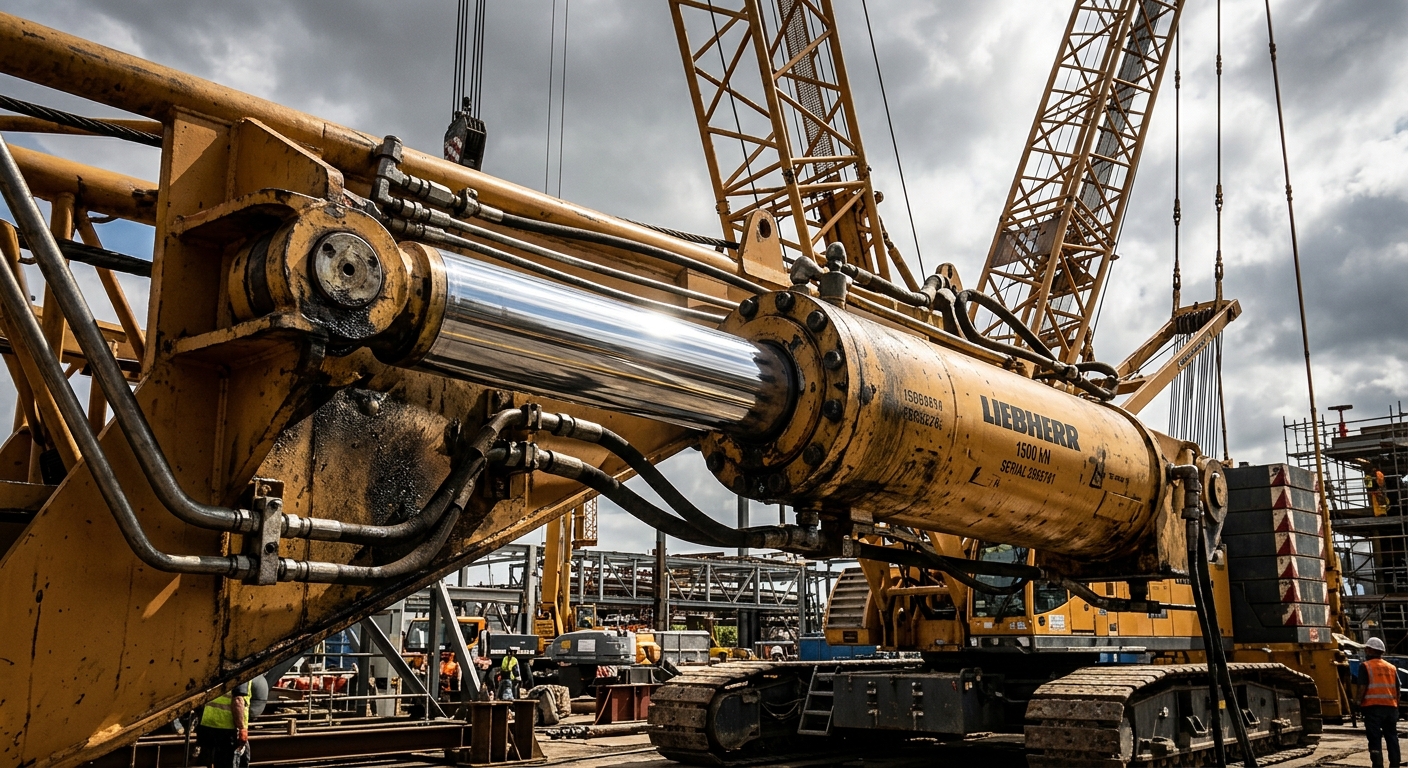
Als een giek onder een gehouden last naar beneden zakt — zelfs een paar millimeter per minuut — is dat een probleem met de hydraulische cilinder of klep, en het beïnvloedt direct de veilige werkbelasting van de kraan. Dit is een van de meest onderschatte inspectiepunten, omdat drift vaak wordt afgedaan als ‘normale hydraulische zakking’, terwijl het in werkelijkheid interne seal-bypass is.
Hoe je het goed test
Houd een nominale last bij een vaste giekhoek enkele minuten vast en meet elke verandering van de top of hoek. Elke meetbare drift buiten de OEM-tolerantie (doorgaans minder dan 1% van de gieklengte per minuut voor de meeste ruwterrein- en autokranen) betekent dat interne cilinderseals olie langs de zuiger laten lekken.
Externe lekken zijn gemakkelijker te vinden — elke zichtbare zweting rond de stangafdichting of cilinderpakking is een automatische afkeuring op de meeste inspectiechecklists, niet slechts een ‘in de gaten houden’-punt. Stangkrassen, meestal door verontreiniging in de hydraulische vloeistof, verschijnen als fijne krassen op het verchroomde stangoppervlak en vreten seals snel aan zodra ze beginnen.
Dit is vooral relevant voor kranen zoals de 35t mobiele kraan platforms die frequent pick-and-carry-werk doen — herhaald cilindercycli onder wisselende lasten belasten seals meer dan stabiele, enkele hijsbewegingen. Als uw duty cycle zwaar is, neem cilinderinspectie dan vanaf het begin mee in uw kraanselectieplanning , niet als bijzaak.
Een inspectieritme opbouwen dat daadwerkelijk wordt gevolgd
De beste inspectiechecklist ter wereld is nutteloos als niemand zich er consequent aan houdt — en dat is het echte faalpunt bij de meeste wagenparken, niet een gebrek aan kennis. Dagelijkse visuele controles door de machinist, maandelijkse gedetailleerde inspecties door een gekwalificeerde technicus en jaarlijkse grondige inspecties (vaak vereist voor certificaatvernieuwing) vormen de ruggengraat die de meeste fabrikanten aanbevelen.
Een praktische dagelijkse-maandelijkse verdeling
- Dagelijks: Visuele controle van de staat van het staaldraadtouw, duidelijke lekken, rammelen van pads tijdens uitschuiven, geluiden van penverbindingen.
- Maandelijks: Gemeten pad dikte, controle van p enspeling, drift testen op cilinders, volledige inspectie van de touwslag.
- Jaarlijks: Volledige NDT (niet-destructief onderzoek) op gieksecties, uitgebreide cilinderdruktesten, volledige beoordeling van vervanging van pennen en bussen.
Distributeurs die wagenparken in exportmarkten beheren — bijvoorbeeld een mijnbouwoperatie met een 130-tons ruwterreinkraan op een afgelegen locatie — merken vaak dat juist de jaarlijkse inspectie wordt uitgesteld vanwege logistiek. Laat het niet versloffen. Structurele giekproblemen die vroeg worden opgemerkt zijn een reparatie; laat opgemerkt zijn ze een vervanging.
Wanneer slijtdelen, pennen en cilinders op elkaar inwerken — niet op zichzelf staan
Dit is iets wat veel inspectiegidsen missen: deze vier systemen falen niet onafhankelijk van elkaar. Versleten pads zorgen voor giekschommeling, wat ongelijkmatige zijdelingse belasting op pennen veroorzaakt, wat bus slijtage versnelt, wat de belastingshoek op de uitschuifcilinder verandert. Eén zwakke schakel trekt de andere mee omlaag.
Daarom loopt een goede inspectie de giek als systeem na, niet als een checklist van losse onderdelen. Als u padslijtage aan slechts één kant vindt, controleer dan de p enspeling op diezelfde sectie voordat u aanneemt dat het een geïsoleerd probleem is. Als een cilinder drift vertoont, controleer dan of p enspeling stroomopwaarts bijdraagt aan ongelijkmatige cilinderbelasting.
Ploegen die 50-tons mobiele kraan eenheden inzetten op meerjarige infrastructuurcontracten hebben het meest baat bij dit systeemdenken, omdat deze machines genoeg uren maken om kleine toleranties zich over een paar seizoenen zwaar gebruik tot echte structurele zorgen te laten opstapelen.


