The short answer: a rough terrain crane is built for off-road jobsites with a compact four-wheel chassis and big lugged tires, while an all terrain crane is engineered to drive itself on public highways at speed and still handle rough ground when it arrives. If your project is confined to one site with uneven, muddy, or unpaved ground, the rough terrain crane wins on cost and maneuverability. If you’re moving the crane between multiple job locations across a region, the all terrain crane’s road-legal speed changes the economics entirely.
What Actually Separates These Two Crane Types
People assume the difference is just tonnage. It isn’t. The real split is chassis philosophy — one crane is designed to conquer bad ground, the other is designed to get to the ground quickly and then work on it.
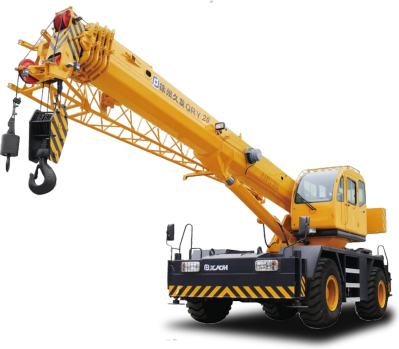
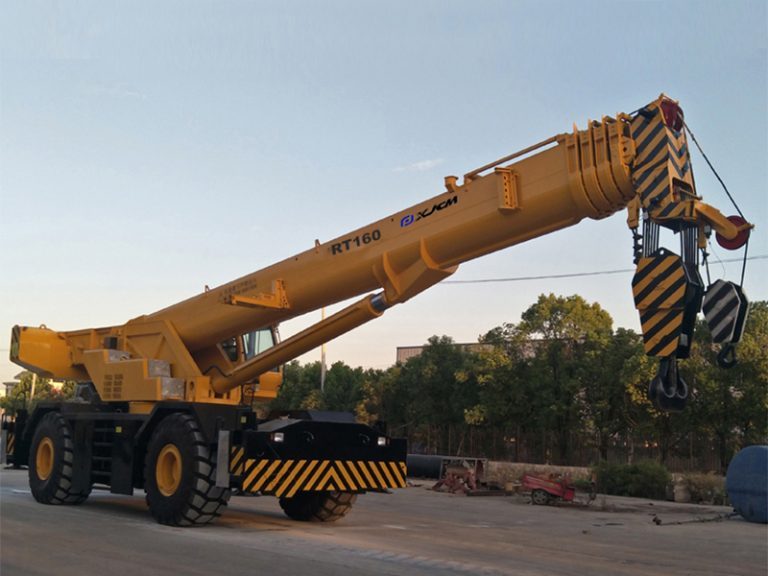
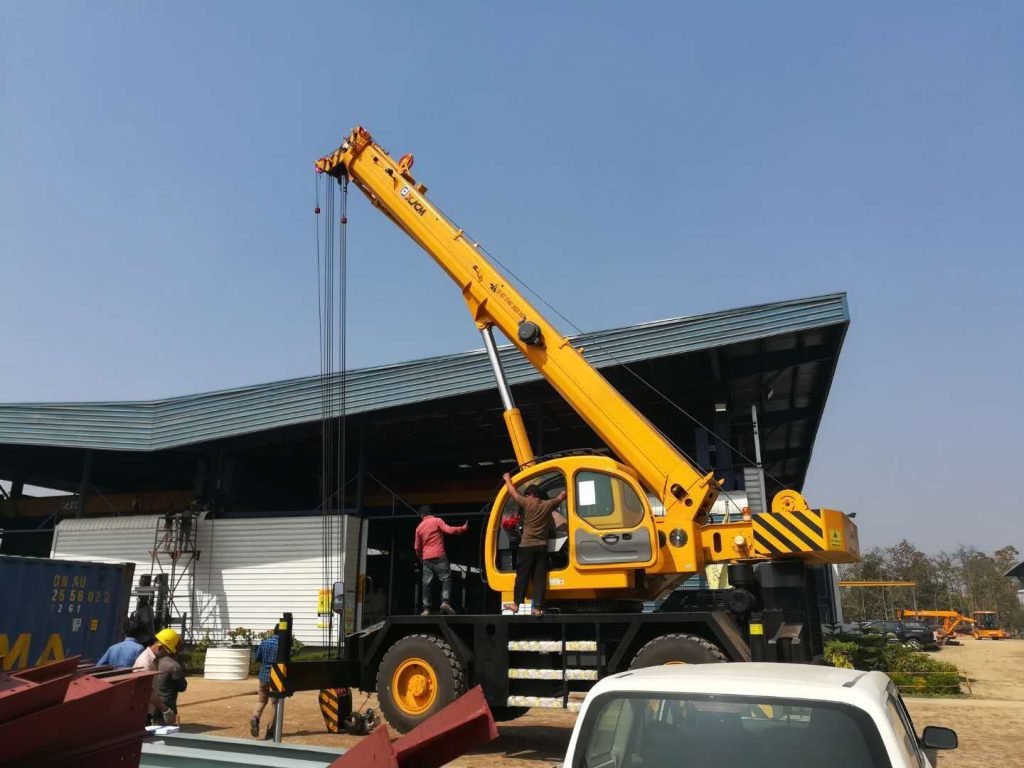
A rough terrain crane runs on four oversized rubber tires with deep tread, all-wheel drive, and all-wheel steering. That setup gives it a tight turning radius and the ability to crawl over rutted, muddy, or sloped terrain that would strand a highway vehicle. But it’s not road-legal in most countries — you load it on a trailer to move it between sites.
An all terrain crane, by contrast, has multiple axles (anywhere from three to nine depending on tonnage), a longer wheelbase, and a cab engineered for highway driving. It can self-drive at 60-80 km/h between jobs, which sounds like a small thing until you’re running a fleet across a country with widely spread projects.

Off-Road Performance: Where Rough Terrain Cranes Dominate
Take a rough terrain crane onto a construction site with no graded access roads, and it just works. That’s the whole point of the design.
Ground clearance on most rough terrain models exceeds 400mm, and the all-wheel steering lets the crane crab-walk or turn on a dime in tight, cluttered sites — something a longer all terrain chassis simply can’t match. This is why even the largest rough terrain cranes keep the compact four-tire layout instead of adding axles.
Real-world example
A mining contractor in a remote inland site once needed to lift compressor units across loose gravel with a 15% grade and zero paved surface. An all terrain crane’s smaller tires and lower clearance would have struggled or needed matting. A 30 ton rough terrain crane handled it in a single pass, repositioning itself three times without support mats.
Highway Mobility: Where All Terrain Cranes Win
Here’s the tradeoff nobody talks about enough: rough terrain cranes need a trailer for every move, and that trailer costs money and time — often more than people budget for.
All terrain cranes solve this by driving themselves on public roads between jobs, sometimes covering 300+ km in a single day under their own power. For a rental company juggling five active sites in different cities, that mobility advantage can outweigh a higher upfront price. Fewer trailer bookings, fewer permits, faster crane turnaround between contracts.
The catch is axle load regulations. In many countries, an all terrain crane above a certain tonnage needs route permits and possibly police escorts for oversized loads — plan for that lead time, especially in CIS and Middle East markets with strict axle-weight enforcement.

Lifting Capacity and Boom Reach Compared
Tonnage overlap confuses a lot of buyers — a 60 ton rough terrain crane and a 60 ton all terrain crane are not interchangeable machines despite the matching number.
Rough terrain cranes top out lower overall (roughly 10 to 160 tons in most manufacturer lineups, including CNXJCM’s own range covered in our guide to the 60 ton rough terrain crane) because the compact chassis limits counterweight and outrigger spread. All terrain cranes scale much higher — some models exceed 1,000 tons — because the longer multi-axle frame supports far more counterweight and a taller telescopic boom.
For mid-range work like precast panel installs or steel erection under 60 tons, both crane types can technically do the job. The deciding factor becomes ground condition and mobility need, not capacity.
Cost Differences Buyers Underestimate
An all terrain crane of comparable capacity typically costs more than a rough terrain crane — sometimes significantly more — because the road-legal axle engineering, suspension, and highway cab add real manufacturing cost.
But sticker price isn’t the whole story. Factor in:
- Trailer and transport costs for every rough terrain crane relocation
- Route permit fees and escort costs for large all terrain cranes
- Tire replacement costs — rough terrain tires wear faster on abrasive off-road surfaces
- Operator training — all terrain cranes often require a different license class for road driving
If your fleet stays on one or two static sites, the rough terrain crane’s lower purchase price and simpler operation usually win the total cost comparison. Our breakdown on how to choose the right crane tonnage without overpaying covers this budgeting logic in more depth.
Site Access and Setup Speed
Setup time is where the rough terrain crane’s simplicity pays off again. Outriggers deploy fast, the compact footprint fits tight urban or industrial sites, and there’s no concern about swinging a long wheelbase around corners.
All terrain cranes need more room to maneuver into position because of their longer frame, and outrigger spread for maximum capacity can require more clearance than a congested site offers. For port and logistics operators working in cramped yard environments, this alone can rule out an all terrain crane regardless of tonnage advantages.
A quick gut-check
Ask yourself: does my site have graded, compacted access roads? If yes, an all terrain crane is workable. If the ground is loose, sloped, or unimproved, go rough terrain — don’t fight the terrain with the wrong chassis.

Steering Systems and Maneuverability
Not all rough terrain cranes steer the same way, and this matters more than most buyers realize when sites get tight. Some models offer independent four-wheel steering, crab steering, and coordinated steering modes — each suited to different obstacle layouts.
Our detailed guide on types of steering systems in rough terrain cranes covers how these modes affect turning radius and load stability during repositioning. All terrain cranes generally offer rear-axle steering assist for highway stability but lack the tight-radius crab steering that makes rough terrain cranes so nimble on cluttered sites.
Which One Should You Actually Buy?
Choose a rough terrain crane if you work fixed sites — construction, mining, energy, or infrastructure projects where the ground is unpaved and the crane stays put for weeks or months. Sizes from 20 ton up to 35 ton customized configurations cover most contractor needs.
Choose an all terrain crane if you’re running a rental fleet covering multiple regional jobs, need to self-drive between sites on public roads, and the extra cost is offset by fewer trailer moves. For buyers still narrowing down tonnage first, start with our guide on choosing the right crane tonnage before comparing chassis types.
And if neither fits — say you need frequent urban relocation with tight lifting needs — a truck mounted crane or truck crane might actually be the better fit than either rough terrain or all terrain configurations.